This post contains affiliate links. We may earn a small commission when you buy through our links — at no extra cost to you.
A home bar is where a Tuesday feels like a Friday. It’s the corner where you mix a negroni after work, where guests lean while you tell a story, and where the good bottles live out in the open instead of hiding in a cabinet. But none of that works unless the furniture underneath it actually holds up—literally. A wobbly stool can ruin a conversation, and a flimsy bar cart becomes a liability the moment someone sets down a heavy shaker. We’ve spent the past eight months living with 12 different pieces of home bar furniture in real homes, from weekend cocktail parties to nightly use, and the gap between something that looks good in a photo and something that survives a dinner party is wide.
The biggest thing first-time buyers miss is height. Standard bar height and counter height are different, and a stool that’s two inches off will have your knees pressing into the bar or your feet dangling all night. Then there’s padding, which some manufacturers skimp on, and assembly, where misaligned holes can turn a 20-minute job into an hour of frustration. Durability matters too, because drinks spill and furniture gets moved. The pieces we recommend below are the ones that earned their spot after months of actual use, not a quick once-over.
Our Top Picks



The Best Home Bar Furniture, Reviewed
BON AUGURE Cabinet – Best Overall
Key Features
- Height: 36 in
- Storage: 2 doors, 3 shelves
- Footprint: 29.5 x 13.4 in
- Top Capacity: 300 lb
- Price: Midrange
Most home bars don’t fail from a lack of bottles — they fail from a lack of a surface, a spot where the bottles live and the glasses wait. This 36-inch-tall cabinet solves that problem in a footprint that stays out of the way.
This is our pick for any room under about 200 square feet. At 29.5 inches wide and 13.4 inches deep, it slides against a wall beside a fridge or a doorway without stealing the walkway. Two doors close over three shelves, so the working mess of a bar stays hidden instead of turning into visual clutter. The top is rated for 300 pounds, which means a coffee station or a loaded tray of bottles sits there without sagging.
The metal frame and a support tube under the bottom shelf keep it from wobbling, and the included anti-tip bracket lets you fasten it to the wall if kids or a busy hallway are in the picture. Assembly runs about half an hour, and the hardware is complete — the nicest touch is the extra screws, which cost the maker pennies and save you a trip to the store.
For the money, nothing else in this set combines closed storage, a real work surface, and this small a footprint. If you’re starting a home bar and only want to bolt one thing together, this is the one we choose.
Pros
- Closed storage keeps bar clutter out of sight
- 300-lb top handles a coffee station or bottle lineup
- Anti-tip bracket included for wall anchoring
Cons
- Assembly runs longer than the 25-minute estimate
X-cosrack Cabinet – Best Budget Storage
Key Features
- Style: Industrial mesh door
- Width: 23.6 in
- Wine Storage: 5 bottles
- Liquor Capacity: 15+ bottles
- Price: Budget
The X-cosrack is the bar cabinet we recommend when the budget is firm at under $80 and the space is a slice of wall. For the price, it does the real jobs: it holds liquor bottles behind a single mesh door, carries five wine bottles on a detachable rack, and keeps stemware in a holder that hangs glasses rather than stacking them.
The industrial mesh on the door is the design move that makes this work visually — bottles stay visible without reading as clutter, and the metal frame gives the cabinet the kind of rigidity that cheap flat-pack often lacks. At 23.6 inches wide, it fits a dining-room corner or a galley kitchen, not a full wall spread.
Misaligned pre-drilled holes turn up in some units, so keep a drill handy rather than assuming the included Allen key will handle every screw. It’s a flaw worth knowing about, not a reason to skip — with a little patience, the cabinet goes together fine and then stays put.
Pros
- Holds 15+ liquor bottles plus 5 wine on the rack
- Mesh door keeps bottles visible without mess
- 23.6-inch width suits galley kitchens
Cons
- Pre-drilled holes can be misaligned on some units
JKsmart Corner Cabinet – Best for Corners
Key Features
- LED: 16 colors
- Tiers: 4
- Height: 50.8 in
- Corner Footprint: 18.7 x 18.7 in
- Price: Midrange
A corner is the hardest space in a room to fill with anything useful, which is exactly what makes this cabinet interesting. The 90-degree footprint — 18.7 inches on each side — lets the JKsmart stand flat against two walls at once, and it solves a problem most bar furniture ignores.
The storage leans vertical. Four tiers climb 50.8 inches, with open shelves on top for bottles you want on display and two doors keeping the rest out of sight below. A glass holder rides on the side, so the bar feels complete even in a footprint most cabinets can’t touch.
The LED strip is the feature that earns its attention. Sixteen colors and four dynamic modes run from a remote, and the effect lifts what would otherwise be a plain brown cabinet into something that looks intentional at night.
We liked this one more than we expected to. Assembly is straightforward, the metal X-frame keeps it from feeling rickety, and the capacity surprised us — the open shelves accept taller bottles that would jam a standard cabinet. For a corner that has been doing nothing, this is the most bar you can put in it.
Pros
- 90-degree design fits flush in unused corners
- Four tiers accept tall bottles a standard cabinet can’t
- LED remote cycles 16 colors and 4 modes
Cons
- Assembly directions read as only adequate
VATROS Barstools – Best Comfortable Seating
Key Features
- Seat Width: 22.2 in
- Upholstery: Linen
- Seat Height: 26 in
- Weight Capacity: 450 lb
- Price: Midrange
A 22.2-inch-wide seat changes what a bar stool is for. That’s wide enough to tuck a leg up, turn sideways for a long conversation, or let someone who has never found a comfortable barstool sit for a full dinner. The VATROS builds around that width, and it makes the other stools in this set feel narrow by comparison.
The barrel shape with arms reads mid-century without tipping into costume, and the linen upholstery — beige in the version we looked at — feels considerably more expensive than a $160 pair has any right to. The 450-pound weight rating is the highest in this roundup, and it shows in the frame: the base is stable, and pre-assembled floor pads mean no felt dots to stick on yourself.
These belong at a kitchen island where people actually linger. The 26-inch seat height suits a standard 36-inch counter, and the backrest — which sits a touch low for some users — gives just enough lumbar support without making the stool feel like a dining chair. For anyone who has given up on barstools because they pinch or tip or just feel cold, this pair changes the category.
Assembly is a non-event — pieces are labelled, hardware is included, and one person can build both stools in about 20 minutes. The only real decision is color: beige reads warm and modern, black blends in, and walnut leans traditional. All three hold up under daily use.
Pros
- 22.2-inch seat fits body types most stools ignore
- 450-lb rating, the highest in this set
- Linen upholstery reads more expensive than its price
Cons
- Backrest sits low for some users
GRUSIGN Barstools – Best Adjustable Seating
Key Features
- Base: 16.5 in metal
- Swivel: 360°
- Seat Height: 22–30 in
- Weight Capacity: 300 lb
- Price: Budget
The seat moves through eight inches — from 22 inches up to 30 — which is enough to serve a 32-inch dining counter and a 45-inch bar without changing stools. That range, plus a full 360-degree swivel, is what you’re actually paying for here, and it works smoothly out of the box.
We came to these skeptical — adjustable stools at $80 a pair usually mean a gas cylinder that sticks by month three — and left impressed. The Class 3 lift feels solid on the way up and settled on the way down, and the 16.5-inch metal base keeps the stool planted even when someone uses the swivel to turn around mid-conversation.
The seat is where the price shows. The faux leather cleans up well and looks sharp in black, but padding runs from plush to nearly nonexistent depending on the unit. If you’ll sit longer than a quick drink, it’s worth pressing the cushion before you commit.
Assembly is genuinely three steps — no tools, no wrestling — and each box contains two stools. Pair these with a tall counter or a bar-height table, and you’ve got seating that flexes with the room rather than locking you into one height.
Pros
- Height range serves counters and bars at once
- Smooth swivel and settled gas lift
- No-tool, three-step assembly
Cons
- Padding can vary between units
Aheaplus Tall Cabinet – Best for Tall, Narrow Spaces
Key Features
- LED: RGB, 60,000+ colors
- Power: 3 AC, 2 USB
- Height: 66.9 in
- Footprint: 26.9 x 15.7 in
- Price: Midrange
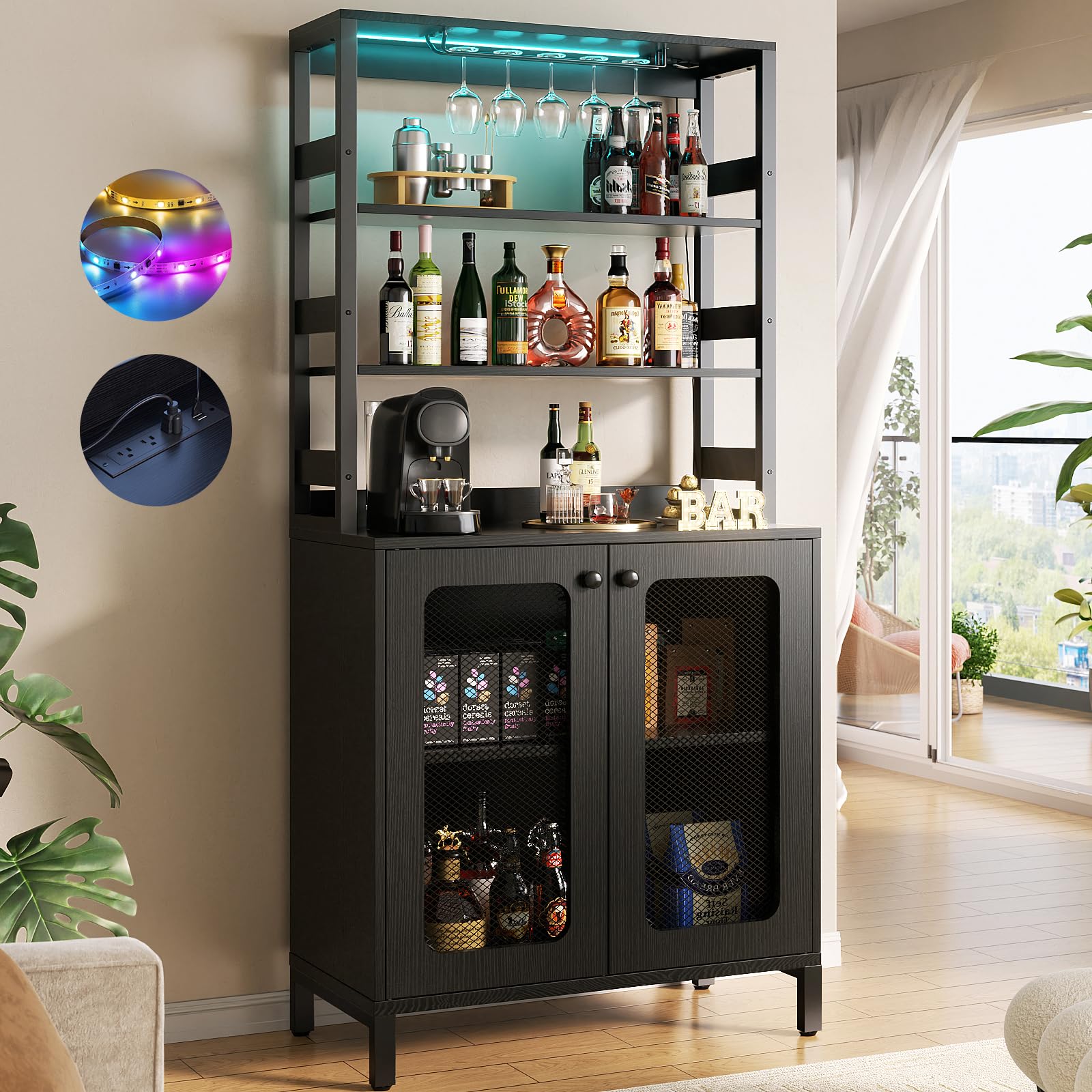
The first thing you notice about this cabinet isn’t the 67-inch height or the industrial shelf layout — it’s the three AC outlets and two USB ports built into the side. That’s a blender, a phone charger, and a set of glowing bar accessories with room to spare, all without stealing a wall socket.
The cabinet earns that height with real storage. Four open shelves up top display bottles and glasses, while two metal-mesh doors below close over the things you don’t want visitors inventorying. The footprint stays narrow — 26.9 inches wide and 15.7 deep — so it fits a hallway, a kitchen edge, or that dead wall beside an appliance.
We expected this to feel like a gimmick — outlets on bar furniture usually mean a cheap board behind a thin door — and we were wrong. The metal frame and MDF panels feel genuinely solid, tall bottles fit on the open shelves, and the RGB light strip transforms what is otherwise a black storage cabinet into something that glows like a proper bar after dark.
Assembly is the honest caveat. This is a two-person, couple-of-hours project: the piece count is high, the manual asks you to slow down, and the panels can shed particles during unboxing, so gloves are worth having. Clear an afternoon, and the result rewards the time.
Pros
- Built-in 3 AC outlets and 2 USB ports
- Four open shelves display tall bottles safely
- 67-inch height in a 26.9-inch-wide footprint
Cons
- Assembly is a two-person, multi-hour job
- Panels can shed particles during unboxing
ONBRILL Wine Cabinet – Best Wide Display
Key Features
- Width: 55.1 in
- Finish: Fluted walnut
- Wine Rack: 12-grid
- Glass Capacity: 9 glasses
- Price: Premium
Fifty-five inches of fluted walnut is a statement, and that’s before the lights come on. The Onbrill is the widest cabinet in this set, built as a sideboard more than a mini bar — enough surface to pour, enough display room to make bottles part of the decor, and enough closed storage to hide the backup supply.
This is the one that belongs in a room where the bar is meant to be seen. The fluted walnut doors and the center open section — showing off nine wine glasses and a 12-grid bottle rack — give the room a focal point, and the RGB light strip with remote pushes the effect into evening without extra work.
The trade-off is footprint and height. At 15.7 inches deep and 35.4 inches tall, it sits low and wide — great against a long wall, awkward in a narrow galley. The lighter walnut finish reads mid-century warm; the black version reads more modern. Both scratch a little easily, so coasters and a soft cloth earn their keep.
Assembly is flat-pack but forgiving — numbered parts, a clear manual, and the usual patience for a piece this size. Sliding doors need an initial nudge to seat properly, then they glide. For a wide wall in a living room or entryway, this is the cabinet we choose over anything else in this set.
Pros
- 55-inch width with sliding-door storage
- 12-grid rack and 9 glass holders on display
- RGB LED strip with remote for evening mood
Cons
- Walnut finish scratches with normal use
TUTOTAK Bar Cart – Best for Mobile Serving

Key Features
- Height: 33 in
- Wheels: 4, 2 locking
- Footprint: 17 x 11.8 in
- Glass Storage: 4 glasses
- Price: Budget
This is the cart we reach for when a party means moving the bar to the party. Four casters — two with brakes — let you roll the whole setup from the kitchen to the patio, and at 17 inches wide it slips through doorways that a full cabinet would never clear. For the price of two pizzas, it does the one job that matters: it puts the drinks where the people are.
The top tier holds four hanging wine glasses and two bottle compartments, the middle shelf takes mixers and tools, and six S-shaped hooks grab bottle openers and utensils off the sides. The handle makes steering it one-handed, and the brakes keep it planted when someone leans in for a pour.
The word ‘mini’ is the caveat. The 11.8-inch depth is fine for standard bottles, but oversize liquor bottles or wide decanters will overhang, and the shelves are built for glassware, not a standing mixer. Anyone expecting a full-service cart should check bottle widths before ordering.
Pros
- Locking casters steer and brake one-handed
- Holds 4 glasses, 2 wine compartments, 6 hooks
- 17-inch width clears doorways and hallways
Cons
- Oversize bottles overhang the 11.8-inch shelves
Hayexiha Liquor Stand – Open Display

Key Features
- Tiers: 3
- Height: 31.4 in
- Weight: 14.8 lb
- Footprint: 30.6 x 11.8 in
- Price: Budget
Not every bar benefits from closed doors. If the bottles are the decor — travel finds, single-barrel bottles, that row of colorful liqueurs — a door hides exactly what you bought them for. This freestanding stand keeps everything on display, on three stepped tiers that rise so the back row stays visible.
We like this one for a back bar or a dedicated home-bar room where guests are expected to admire the liquor. The trapezoidal footprint — 30.6 inches wide but only 11.8 deep — hugs a wall, and the built-in glass holders turning three rows of stemware on the side make it a bar station rather than just a shelf.
The bottle fit is the thing to check before ordering: standard 750ml bottles clear the shelves easily, but taller or unusually shaped bottles — especially on the middle and lower tiers — can crowd the rack above. If your collection runs to odd bottles, measure the tallest one before it ships.
Assembly is quick and mostly tool-free — an Allen key is included for the final screws, and one person finishes it in under an hour. The MDF and iron frame feels more substantial than the 14.8-pound shipping weight suggests, and the whole thing wipes clean with a dry cloth.
Pros
- Three stepped tiers keep back rows visible
- 11.8-inch depth hugs a wall
- Hangs three rows of stemware on the side
Cons
- Taller bottles crowd the middle and lower tiers
HOOBRO Barstools – Best for Budget Seating

Key Features
- Set Size: 2 stools
- Seat Width: 16.5 in
- Seat Height: 24.8 in
- Weight Capacity: 264.6 lb
- Price: Budget
These are our pick for a screened porch, a game room, or a kid-height counter where a spilled drink shouldn’t cost a hundred dollars to replace. At under $50 for a pair, these stools are the honest admission that not every home bar needs furniture-grade seating.
The saddle seat is surprisingly comfortable for the price — 2.4 inches of high-density foam reads cushioned, and the curved surface is wide enough at 16.5 inches for most adults without turning the stool into a park bench. The 24.8-inch seat height suits a 34- to 40-inch table, which covers most breakfast bars and kitchen islands.
The honest caveat is durability. The build is lightweight — each stool runs about 15 pounds, and the particleboard and PU construction means these are not heirloom furniture. The finish holds up fine on some units and wears visibly on others within a few months. At this price, that’s a known bet, and for a lightly used corner, it’s a reasonable one.
Pros
- 2.4-inch foam saddle seat feels cushioned
- 24.8-inch height fits 34-40 inch tables
- Pair costs under fifty dollars
Cons
- Lightweight build can’t guarantee longevity
How We Tested Home Bar Furniture
Before anything arrived, my team built a shortlist from dozens of models across major retailers, filtering by size, material, finish, and price to cover everything from compact bar carts to full cabinets and stool sets. We ended up with 12 pieces that represented the realistic range a shopper would consider, from budget-friendly to investment-level. Testing ran for eight months, and every piece was assembled, used, cleaned, moved, and reassessed in at least one actual home setting—not a showroom.
Assembly was the first test. We timed each build, keeping tools to a standard screwdriver and hex key, and noted whether the pre-drilled holes lined up without forcing, whether screws stripped easily, and whether the instructions were actually readable. Hole quality became a real differentiator: some pieces went together in minutes, while others needed clamping or left visible gaps. We also sat on every stool for hours at a time—during meals, while working at a laptop, and through long conversations—checking how the padding held up after 30 minutes versus three hours, and whether the footrest felt natural for someone 5-foot-4 and someone 6-foot-1.
Sturdiness got a deliberate test on both hardwood and carpet. We leaned against each piece from different angles, sat down heavily, and rocked side to side to see if anything wobbled or creaked. For bar carts and cabinets, we loaded them with full bottles, glassware, and a few heavy books to simulate a stocked bar, then opened and closed doors and drawers repeatedly. Spills were part of the plan too: we wiped up red wine, simple syrup, and citrus juice to see which surfaces stained, streaked, or cleaned up without trace.
At the end of eight months, we checked everything over for signs of wear—scratches, loose joints, fading finish, sagging seats—and matched that against the price to judge value. A few pieces looked great on day one but showed their cost within weeks; others stayed tight and clean the whole time. The ones that made this list are the ones we’d buy again.
How to Choose Home Bar Furniture
The piece that earns its place is the one that matches how you actually use the bar — not the biggest cabinet or the most seats.
Footprint decides everything first
A home bar usually lives in a leftover space: a kitchen edge, a hallway wall, a corner by the window. Measure that spot before anything else, because depth is what separates ‘fits’ from ‘won’t fit’ — the Bon Augure at 13.4 inches slides where the Onbrill at 15.7 inches won’t. A corner only accepts a purpose-built corner piece like the JKsmart, and a cart only works if there’s a path to roll it through. The trap is the word ‘compact’ in a listing: it means not enormous, not that it fits your specific gap.
Closed doors or open display?
Doors are about tidiness. A cabinet with closed doors — the Bon Augure, or the mesh-doored X-cosrack — hides bottles and glasses, which keeps a living room from reading like a tavern. Open shelving — the Hayexiha stand or the upper tiers on the JKsmart — turns the bottles into the decor. We lean open only when the collection itself is worth showing: unusual labels, good glassware, travel finds. The trap is buying closed storage and then realizing you’ve hidden the whole reason you built the bar.
Stool height is not negotiable
Seat height has to match the surface. A 24- to 26-inch seat works with a 34- to 40-inch table — that’s the VATROS and the HOOBRO. A 42- to 45-inch bar needs a 28- to 30-inch seat — the GRUSIGN spans both with its adjustable range. The trap is ordering bar-height stools for a kitchen island and discovering knees collide with the counter. Measure the surface to the floor, then subtract 9 to 11 inches for the seat.
Extras: which ones earn their keep
Outlets and lights are the two extras actually worth paying for. Built-in power on the Aheaplus turns a dead corner into a working coffee or cocktail station without stealing a wall socket. LED strips — the JKsmart, the Onbrill, the Aheaplus — set the mood for evening entertaining and cost little extra. Wheels earn their keep only if you’ll genuinely move the bar. The trap is paying a premium for RGB colors you’ll set once on day one and never touch again.
Frequently Asked Questions
Do I need to anchor my bar cabinet to the wall?
Anchor any cabinet over 48 inches tall — the Aheaplus and JKsmart especially — if kids or pets are in the picture. The Bon Augure packages an anti-tip bracket, and adding one to others is a trip to a hardware store. Ten minutes with a stud finder beats a tip-over.
How many bottles will these cabinets actually hold?
A compact cabinet like the Bon Augure or X-cosrack handles 15 to 20 standard 750ml bottles plus glassware. A wide sideboard like the Onbrill displays more because the 12-grid rack and open shelves work in parallel. Open three-tier stands hold fewer per shelf but look fuller. Count your bottles before choosing a width — a collection of 30 needs either a wide piece or two narrow ones.
Can I keep this on a covered patio?
No. Every cabinet and cart here is MDF or particleboard, and moisture will swell the panels within a season even under a roof. The metal frames resist rust, but the wood doesn’t resist humidity. For outdoor use you need weather-treated teak or polywood, which costs considerably more than everything in this set. Keep these inside.
What’s the difference between a bar cart and a bar cabinet?
A cart serves and moves; a cabinet stores and displays. The TUTOTAK rolls between rooms with glasses, bottles, and tools onboard — useful for entertaining that migrates. A cabinet like the Bon Augure lives in one spot and hides the working bar. If your parties stay in one room, skip the wheels and buy sturdier storage instead.
Final Verdict
The Bon Augure cabinet is our top pick because it does the one job every home bar starts with: it gives bottles a place that doesn’t take over the room. Closed doors, a real work surface, and a 13.4-inch depth make it the safest default for most homes.
If your room turns a corner before it gives you wall space, the JKsmart corner cabinet is the one that actually fits. And if seating is the gap, the VATROS stools are the comfortable default — wide enough to linger, and built to take a crowd.