This post contains affiliate links. We may earn a small commission when you buy through our links — at no extra cost to you.
A liquor cabinet has a split personality: it needs to look good enough to sit in the dining room and be strong enough to hold thirty pounds of glass. Plenty of affordable ones photograph beautifully and then bow in the middle the first time you load them up. What a good one actually fixes is the clutter — bottles migrating across your counter, mismatched glassware jammed into a kitchen cupboard, the nice bottle you forgot you owned because it was behind the cereal.
I’ve hosted enough dinner parties to know everyone ends up in the room where the drinks are, which means this cabinet gets examined up close, glass in hand, by people who will notice a crooked door. Over eight months my team built, loaded, and lived with ten cabinets, from compact corner units to full sideboards. One thing I’d tell a first-time buyer: check interior depth and shelf spacing against your tallest bottle before anything else — the capacity listed on a product page rarely accounts for a rye bottle standing upright. The picks below are the ones that held up.
Our Top Picks


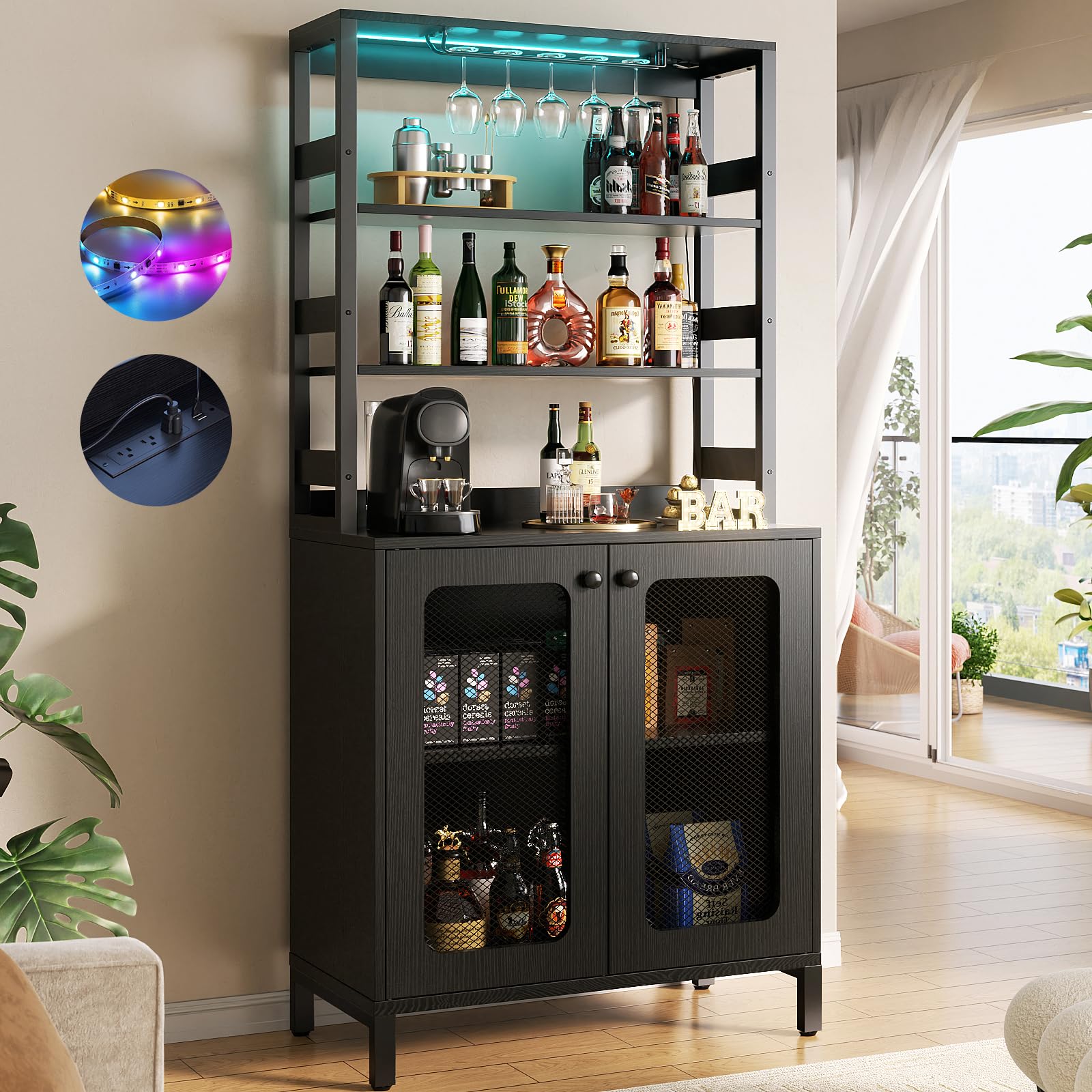

The Best Liquor Cabinets, Reviewed
Aheaplus Corner Bar Cabinet – Best Overall
Key Features
- Power: 3 outlets, 2 USB ports
- Storage: 5 shelves, 2 doors
- Lighting: RGB LED
- Footprint: 17.5"D x 17.5"W x 64.2"H
- Price: Midrange
A 17.5-inch-square corner is all this cabinet asks for, and it pays that back with five shelves, a glass rack, and two doors. The triangular shape is why it works in rooms where a rectangular sideboard crowds a walkway. It is a tall cabinet at 64.2 inches, so it reads as furniture rather than a tucked-away accessory.
What earns it our default recommendation is the combination of storage and built-in power. Three outlets and two USB ports sit on the cabinet, so a blender, a phone charger, or a small light can stay plugged in without a cord running across the floor. The RGB light adds a bar-like glow, and the glass rack keeps stemware where you can reach it. We also like that the doors let you close the bar up when the room needs to look less busy.
The build is engineered wood and metal, and the adjustable feet help it sit level on older floors. Assembly is the part to plan for: there are a lot of pieces, and the directions are not always clear, so give it an afternoon and a second pair of hands. Once it is square and loaded, it turns a dead corner into the most deliberate part of the room.
Pros
- Built-in outlets and USB ports
- RGB LED lighting
- Five shelves plus glass rack
- Corner footprint saves floor space
Cons
- Doors and LED panel can be finicky
BON AUGURE Small Bar Cabinet – Best for Tight Spaces
Key Features
- Doors: 2 doors
- Shelves: 3 adjustable shelves
- Dimensions: 29.53"W x 13.39"D x 36"H
- Weight capacity: 300 lb top; 100 lb shelves
- Price: Midrange
A 300-pound top rating sounds excessive until you start loading a cabinet with bottles, a coffee maker, and a stack of glasses. At 29.53 inches wide and 13.39 inches deep, this is one of the least obtrusive full cabinets here, and the 36-inch height keeps it below eye level in a small room. That combination is why we keep it near the top for tight spaces.
The two doors and three adjustable shelves do the quiet work. You can set the shelves for tall bourbon bottles, lowball glasses, or a coffee station, and the metal frame and support tube under the bottom shelf give it a planted feel. This is not a dedicated wine rack, so bottles stand on shelves and stemware has to share space. What you give up in display, you gain in flexibility.
The anti-tip device is a sensible inclusion for a loaded cabinet, and the adjustable feet help on uneven floors. We also appreciate that the top surface is rated for 300 pounds and each shelf for 100, because that is the kind of headroom that lets a bar cabinet do more than hold bottles. Finish and hardware are secondary here; the point is a small cabinet that does not feel flimsy.
Pros
- 300-lb top and 100-lb shelves
- Adjustable shelves and two doors
- Compact 29.5-inch width
- Anti-tip device included
Cons
- Shelf storage only, no wine display
X-cosrack Wine Bar Cabinet – Best Budget
Key Features
- Door: Mesh door
- Dimensions: 23.6"W x 13.4"D x 31.1"H
- Wine storage: 5-bottle detachable rack
- Glass storage: Detachable stemware holder
- Price: Budget
The detachable five-bottle wine rack is the reason this cabinet makes sense for a renter or a first bar. It lifts out when you want a flat shelf, and the mesh door keeps the bottles visible without putting the whole collection on open display. At 23.6 inches wide and 31.1 inches tall, it fits in places where a full sideboard will not.
We like the flexibility more than the size. The rack and glass holder come out, so the interior can shift from wine storage to general bar storage, and the 330-pound capacity is generous for a cabinet this compact. The one-door layout means you need clear space to swing it, so measure the door path before you commit. For a starter bar, it covers the essentials without asking for a whole wall.
The finish is a rustic brown over engineered wood with a metal frame, and the adjustable feet help it settle on an uneven floor. We treat this as a cabinet for a modest collection: five wine bottles in the rack, with the rest on shelves. That is the trade-off, and it is an easy one to accept when the footprint and the flexibility are the priority.
Pros
- Detachable five-bottle wine rack
- Mesh door keeps bottles visible
- Small 23.6-inch footprint
- 330-lb weight capacity
Cons
- Holds only five wine bottles in the rack
JKsmart Corner Bar Cabinet – Best Midheight Corner Bar
Key Features
- Frame: Metal X-frame
- Storage: 4 tiers, 2 doors
- Lighting: 16 colors, 4 modes
- Dimensions: 18.7"D x 18.7"W x 50.8"H
- Price: Midrange
At 50.8 inches tall, this corner cabinet stops below eye level in most rooms, which is the first thing we noticed against the taller Aheaplus. The 18.7-inch square footprint gives it a smaller landing zone than a full sideboard, and the curved front keeps the shape from looking bulky. It is a corner piece, so it needs a real 90-degree corner to sit cleanly.
The LED strip is the feature that makes it feel less like storage. It has 16 colors and four modes, and the open top and guardrail give you a place for bottles or a small appliance. The two doors hide the bulk of the collection, while the four tiers keep the things you use often within reach. It is a useful split between display and closed storage.
We rate it as the best midheight corner option here because it keeps the bar visible without demanding a wall. The open top means more dusting than a fully closed cabinet, but it keeps the bottles you use most within reach. Assembly is a patient job, but the result feels stable, and the metal frame gives it a planted stance. If a 64-inch tower feels too tall, this is the compromise we make.
Pros
- 16-color LED lighting with four modes
- Midheight 50.8-inch corner frame
- Two doors and four tiers
- Sturdy metal X-frame
Cons
- Requires a true 90-degree corner
Aheaplus 67-Inch Bar Cabinet – Best Tall Display
Key Features
- Power: 3 outlets, 2 USB ports
- Storage: 4 open shelves, 2 doors
- Lighting: RGB LED
- Dimensions: 15.7"D x 26.9"W x 66.9"H
- Price: Midrange
A 67-inch tower is a commitment, but it is the right one if you want the bar to be part of the room rather than a cabinet you open and close. At 26.9 inches wide and 15.7 inches deep, it takes more wall than the corner pick but less width than a sideboard. The upper hutch has four open shelves, and the lower section hides the rest behind two doors. That split is why we recommend it for a bigger collection: the bottles you use most stay visible, and the backup stays out of the way.
Three outlets and two USB ports are built into the cabinet, so a coffee maker, a small blender, or a phone charger can live at the bar without a power strip on the floor. The RGB light adds a warm wash in the evening, and the open shelves make the good bottles look intentional. We appreciate that this is a bar cabinet that can also work as a coffee station or a small appliance stand, but the liquor storage is the reason to buy it.
The size is the trade-off. It is tall and relatively narrow, so it needs a wall with height and a clear door swing rather than a corner nook. The open shelves also mean more dusting than a fully closed cabinet. The result is a statement cabinet, not a hidden one.
Pros
- Four open shelves plus two doors
- 3 outlets and 2 USB ports
- RGB LED lighting
- Tall 67-inch display
Cons
- Long assembly with many pieces
ONBRILL Fluted Wine Cabinet – Best Sideboard-Style
Key Features
- Charging: Charging ports
- Lighting: RGB LED with remote
- Wine storage: 12-bottle rack
- Glass storage: 9-stem glass rack
- Price: Premium
The fluted front and 12-bottle rack are what pull the eye, but the useful part is how quietly this cabinet turns a bar into a sideboard. It is a wide piece, so it wants a dining-room or living-room wall rather than a corner. The walnut finish and glassware display make it look like furniture you chose for the room, not just storage you parked there.
The interior is more specific than most: a 12-grid wine rack, three tiers for nine wine glasses, and charging ports for the small devices that end up at the bar. The RGB light strip is remote-controlled, which sounds gimmicky until you want a softer glow without crawling behind the cabinet. The sliding doors keep the display accessible without a wide swing, a detail that matters in a dining room.
We rate it as the best sideboard-style option here because it gives the bar a furniture role. It is not the cabinet for a hallway or a tight corner; it needs wall space, and the price tier is higher than the compact picks. What you get for that is a piece that looks dressed even when the bottles are ordinary. If your bar lives in the room you entertain in, that matters.
Pros
- 12-bottle wine rack
- Three tiers hold nine glasses
- RGB LED with remote
- Charging ports
Cons
- Needs a wide wall rather than a corner
ARTPOWER Green Bar Cabinet – Best for Small Statement Bars

Key Features
- Doors: Tempered glass
- Dimensions: 37"W x 14.96"D x 31.49"H
- Wine storage: Pull-out bottle storage
- Glass storage: 3 stemware racks
- Price: Premium
The green finish with gold accents is the first thing anyone notices, and it is the reason to consider this cabinet over a plain black box. At 37 inches wide and 31.49 inches tall, it is compact enough for a dining-room wall, and the tempered glass doors keep the bar visible without making it look cluttered. It is a piece that wants to be seen.
The pull-out wine storage is the practical surprise. It slides out as one unit, so you can reach the bottles without unpacking the shelf, and the three stemware racks give glasses a proper home. The single drawer handles openers, napkins, and the small clutter that otherwise collects on top. For a small bar, that organization is worth more than another inch of counter space.
The cabinet is P2-grade MDF with a metal base, and the glass is tempered. It feels like a furniture piece rather than a utility cabinet, but it is not the most substantial build in this group. The door and drawer alignment are the things to check after assembly.
We recommend it as the style-led small-space pick because it makes a compact bar feel deliberate. It is for someone who wants the cabinet to carry the room, not someone who needs a workhorse for a large collection. If you want more heft and closed storage, the BON AUGURE is the better match; if you want the bar to be the prettiest thing in the dining room, this is the one.
Pros
- Green finish with gold accents
- Pull-out wine storage
- Three stemware racks
- Tempered glass doors
Cons
- Glass doors show fingerprints easily
Homeiju Mini Bar Cabinet – Best for Shallow Consoles

Key Features
- Doors: 2 mesh doors
- Storage: 2 drawers, 3 shelves
- Dimensions: 37"W x 11.8"D x 34.44"H
- Weight capacity: 360 lb
- Price: Budget
At 11.8 inches deep, this is the cabinet that slips past a hallway door and still gives you a bar top. It is 37 inches wide, so it uses wall rather than floor space, and the 34.44-inch height keeps the top at a comfortable serving level. For a narrow dining room or a rental, that shallow profile is the whole argument.
The two mesh doors have a magnetic self-locking closure, so they stay shut without a latch, and the two drawers take the small stuff that would otherwise sit on the counter. The open top is wide enough for a decanter, a few glasses, and a bottle you are working through. The cabinet is rated for 360 pounds, which is reassuring when the top is loaded.
The rustic brown finish and mesh doors give it a relaxed, industrial look rather than a formal bar. The interior is best for a modest collection, and the open top is the place for a decanter or a bottle you are working through. It is a cabinet for the bar you use every week, not a cellar.
We recommend it for a shallow wall or a rental where a deep cabinet crowds the room. It gives you doors, drawers, and a serving top without demanding a corner or a big footprint. If you want a more dedicated wine display, the X-cosrack or ONBRILL is the better fit; if the room is short on depth, this is the one that works.
Pros
- Shallow 11.8-inch depth
- 360-lb weight capacity
- Two drawers and mesh doors
- Wide 37-inch top
Cons
- Wide champagne bottles may not fit the rack
How We Tested Ten Liquor Cabinets in Real Living Rooms
We started with a long list of cabinets sold across a wide price range, then narrowed it by footprint, stated bottle capacity, and what owners reported going wrong after a few months — shelves bowing and hardware missing from the box knocked out more candidates than anything else. Ten made the cut, and each arrived flat-packed. I assembled every one myself, alone, with a stopwatch running, and wrote down exactly where the instructions lost me: which step quietly assumed two people, which diagram pointed at the wrong panel, and whether the shelf-pin holes were drilled cleanly or splintered out the side of the board.
Then we loaded them. Each cabinet got a full complement of bottles — including tall rye bottles and a couple of heavy champagne bottles — plus stemware, and we checked back over the first two weeks to see whether shelves stayed level or dipped in the middle, whether doors still closed squarely, and whether the whole thing rocked when nudged on carpet and on hardwood. Finish got tested the way it gets tested at home: a spilled pour left for a few minutes, then wiped.
Across the eight months we restocked, rearranged, and moved each cabinet at least once to see how the joints held, and we weighed what each cost against its hardware, joinery, and how it looked in a real room under lamp light rather than in a studio photo. Cabinets that survived a move without a rattling door earned a lot of credit.
How to Choose a Liquor Cabinet
Start with the wall or corner you can give up, then choose the interior that fits the bottles and glassware you actually own.
Start with the footprint, not the bottle count
A liquor cabinet is furniture, and furniture that blocks a walkway will not stay. Measure the width, depth, and height of the spot, then tape the outline on the floor so you can see the door swing and the traffic path. Corner cabinets use a dead 90-degree nook, while rectangular sideboards need a flat wall and more width. Depth matters as much as width: a shallow 12-inch cabinet can slip into a hallway, while a 17-inch cabinet holds bulkier bottles but sticks out further. Check baseboard clearance and any wall outlet before ordering.
Match the inside to your bottles and glassware
Adjustable shelves are the most useful interior feature because bottle heights vary wildly. A dedicated wine rack is convenient for standard bottles, but the racks here hold five to twelve bottles, so a larger collection still needs shelf space. Stemware holders keep glasses from tipping, yet they eat vertical room; if you have tall coupe or highball glasses, measure them against the shelf above. We prefer a mix of one fixed display area and adjustable shelves below, which is why the BON AUGURE’s three adjustable shelves and the ONBRILL’s 12-bottle rack solve different problems.
Decide how visible the bar should be
Solid doors hide clutter and keep dust off the bottles; mesh and glass doors make the bar part of the room. Mesh is the friendlier choice for a working bar because you can see what you have without opening the door, while glass looks dressier but shows fingerprints. LED lighting and outlets are genuinely useful if you keep a blender, a coffee maker, or a charging cable at the bar, but they add wires and one more thing to check at delivery. We put lighting lower on the list than storage, but it is worth paying for when the cabinet sits in a dark corner.
Budget for assembly and stability
Most of these cabinets arrive flat-packed, and the build is where a good purchase can turn frustrating. A metal frame and a support tube under the bottom shelf matter more than a fancy finish because bottles are heavy. Look for adjustable feet, an anti-tip device, and a stated weight capacity you can trust. Set aside a clear floor area and a second pair of hands, especially for the 64- to 67-inch cabinets. Once it is built, anchor it to the wall before you load the top shelves.
Frequently Asked Questions
Why choose a liquor cabinet over a bar cart?
A cabinet gives you doors, shelf spacing, and a place for stemware; a cart gives you mobility and a smaller footprint. If your bottles live in the dining room and you want them out of sight between gatherings, a cabinet is the tidier choice. If you serve in several rooms, a cart still makes more sense. Decide by whether the bar stays put or moves.
Can a liquor cabinet double as a coffee bar?
Yes, if the cabinet has an adjustable shelf and a top that can take the machine’s weight. Built-in outlets help, but keep the water tank and spills away from the electrical strip. A 36-inch-high cabinet like the BON AUGURE works as a coffee station; a 67-inch tower gives you more separate zones for coffee and liquor. Leave clearance above the machine so you can refill it without pulling it out.
Can I put a liquor cabinet in a garage or basement?
Most of these cabinets are engineered wood with metal frames, and damp air can swell the boards and dull the finish. Keep the cabinet in a conditioned room, away from direct sun and damp concrete. If the only spot is a basement, choose a model with adjustable feet and check it after seasonal humidity changes. A wall anchor is still worthwhile.
Final Verdict
Most people should start with the Aheaplus corner bar cabinet. It uses a dead corner, gives you outlets and lighting, and keeps bottles and glassware behind doors, which is the combination that makes a home bar feel intentional rather than improvised.
If your only space is a narrow wall, the BON AUGURE is the better fit; if the bar should look like a sideboard, choose the ONBRILL. For the tightest budget, the X-cosrack covers the basics. The right cabinet is the one that fits the room you have, not the one with the longest feature list.