This post contains affiliate links. We may earn a small commission when you buy through our links — at no extra cost to you.
Shopping for a built-in beverage fridge feels like picking from a wall of identical black boxes. Most share the same dimensions, same compressor type, and same double-glazed glass door — yet some keep drinks at 37°F for years while others struggle to reach 40°F within months.
That’s why this guide ignores spec sheets and instead focuses on what hundreds of owners actually report: cooling consistency, noise, and longevity. The result is a shortlist of models that earn their keep, whether you need maximum 210-can capacity or dual-zone storage for wine and soda.
The real trade-off most buyers face is between a reversible door for flexible installation and a slightly quieter compressor. Both are valuable — the right choice depends on where you’re putting the fridge and how much background hum you’ll tolerate.
Top Picks
Best for Value & Quiet
Velivi 180 Can Bev Fridge

Key Features
- Width: 23.4 in
- Capacity: 180 cans
- Min Temp: 37°F
- Door Type: Double-layer glass left
- Noise: Very quiet
- Price: $
The Velivi 180-can beverage refrigerator operates quietly enough to go unnoticed next to a home bar or kitchen island, while the double-layer tempered glass door and adjustable shelves give it a clean, built-in look. Its compressor keeps the interior between 37°F and 64°F, and owners consistently note the unit holds temperature well during daily use.
Build quality and appearance earn strong marks across a large sample of owners. The left-hinged door opens smoothly, and the stainless steel trim resists fingerprints. At 34.24 inches tall and 23.42 inches wide, it slides under standard countertops without leaving a gap. The 5.3 cubic foot interior fits a mix of cans, bottles, and even some taller energy drinks on the three adjustable shelves.
A minority of units may show temperature inconsistency, particularly when trying to hold the lowest end of the range. This makes the Velivi better suited for casual beverage storage than for wine or items requiring a precise sub-40°F environment. For most owners storing soda, beer, and water, the performance is more than adequate.
This fridge is the right choice for value-conscious buyers who want a quiet workhorse under a home bar, and for those who prefer a left-opening door (the hinge is not reversible). If your cutout requires a right-hand door or you need dual-zone control, other models will serve you better.
Pros
- Glass door and stainless trim give it a premium look
- Quiet compressor doesn’t interfere with conversation or TV
- Fits 180 cans with adjustable shelving for mix-and-match drinks
- Solid build and good temperature retention for daily use
- Great value — delivers what pricier models offer for less
Cons
- Temperature consistency can vary between units; some may not reach the lowest settings
Best for Quiet & Reversible
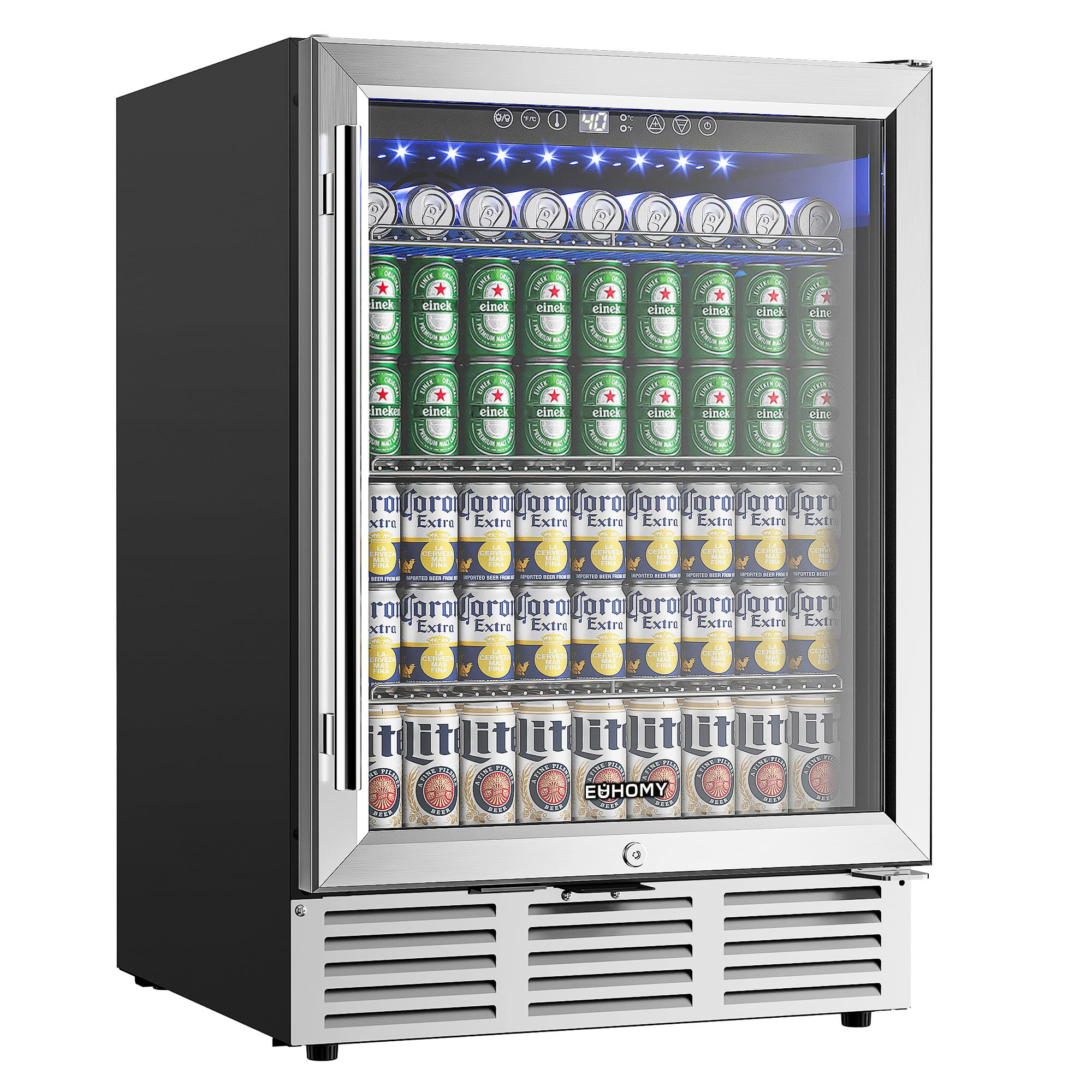
EUHOMY Glass Door 180 Can
Key Features
- Width: 23.4 in
- Capacity: 180 cans
- Min Temp: 37°F
- Door Type: Double-layer glass reversible
- Noise: Quiet
- Price: $$
The EUHOMY glass-door refrigerator distinguishes itself with a compressor that stays nearly inaudible in quiet rooms and a door hinge that swaps sides to fit tight layouts. While the top pick leads on value and review volume, this model trades those for a noticeable drop in operational noise — a real advantage for open-plan kitchens or home offices.
This unit suits buyers who want a refrigerator that won’t compete with conversation or sleep and need the flexibility to mount the door on either side. The double-layer tempered glass keeps the interior visible and fog-free, and the adjustable wire shelves handle tall bottles without trouble. Because it’s a single-zone cooler, it cannot store wine at cellar temperature and drinks at serving temperature simultaneously — a limitation for dual-purpose setups.
Build quality feels substantial for the price point, and the cabinet holds its temperature steadily even in moderate ambient shifts. Installation is straightforward: the unit slides into standard 24-inch cutouts with minimal clearance required. The glass door does expose contents to ambient light, which matters less for soda and beer than for light-sensitive beverages stored over weeks.
Pros
- Compressor noise stays low enough for bedrooms or quiet workspaces
- Door hinge can be reversed to open left or right
- Tempered glass door resists fogging and shows off drink labels
- Temperature retention holds steady during normal daily use
Cons
- Single temperature zone cannot simultaneously store wine and chilled beverages
- Glass door admits ambient light, which may affect light-sensitive drinks over extended periods
- Reversible hinge installation requires checking surrounding clearance for full door swing
Best for Dual Zone Wine
BODEGA Dual Zone Fridge

Key Features
- Width: 23.4 in
- Capacity: 19 bottles + 57 cans
- Door Type: Two glass doors
- Noise: Quiet
- Price: $$
This BODEGA unit separates wine from beverages at their ideal temperatures, a feature no other 24-inch built-in fridge in this lineup offers. The dual-zone controls let you set the left side for red or white wine and the right side for a cold beer or soda – each zone holds its temp independently.
Best suited for wine collectors who want a dedicated wine zone alongside cold beer and soda, or for home bars where the dual-zone justifies the counter space. Total capacity is moderate at 19 bottles plus 57 cans – less than single-zone competitors like the top pick’s 180-can capacity. If you regularly stock for large parties, a single-zone model may serve better.
Compressor cooling maintains consistent temps across both zones, and front venting allows built-in installation under standard counters. Build quality feels solid, with a commercial-grade black finish that hides fingerprints well. The glass doors showcase bottles cleanly, though a slight compressor hum is present – unobtrusive in a bar or kitchen setting.
Pros
- Dual-zone with separate temperature controls keeps wine at 55°F and beverages at 38°F.
- Solid build quality with a commercial black finish that resists smudges.
- Quiet operation suitable for open-plan living spaces.
Cons
- Moderate total capacity (19 bottles + 57 cans) compared to single-zone models that hold 180+ cans.
Best for Max Capacity
Velieta 210 Can Bev Fridge

Key Features
- Width: 23.4 in
- Capacity: 210 cans
- Min Temp: 37°F
- Door Type: Double-layer glass
- Noise: Quiet for most
- Price: $$
The Velieta holds 210 standard cans across three glass shelves – the highest count in this price bracket, making it a clear choice for party hosts or heavy-volume households. While the top pick balances noise and consistency better for typical use, this unit prioritizes raw capacity without charging a premium.
In a busy kitchen or basement bar, the compressor hum fades into the background – but in a quiet open-plan living area or near a bedroom, it may become noticeable. Temperature consistency has shown some variation between units, so this fridge suits casual drink storage rather than wine cellaring where precise degrees matter. The double-layer glass door displays contents neatly, and the stainless steel frame gives a clean built-in look that fits undercounter or freestanding setups.
Pros
- 210-can capacity – the largest beverage stash in this comparison
- Glass door with stainless frame for visible drink display
- Consistent cooling for everyday soda, beer, and water needs
Cons
- Temperature consistency can vary between units – worth checking after setup
- Compressor hum may be noticeable in very quiet rooms – less of an issue in kitchens or bars
- Shipping damage has been reported, so inspect the unit upon arrival
Best for Design & Lighting
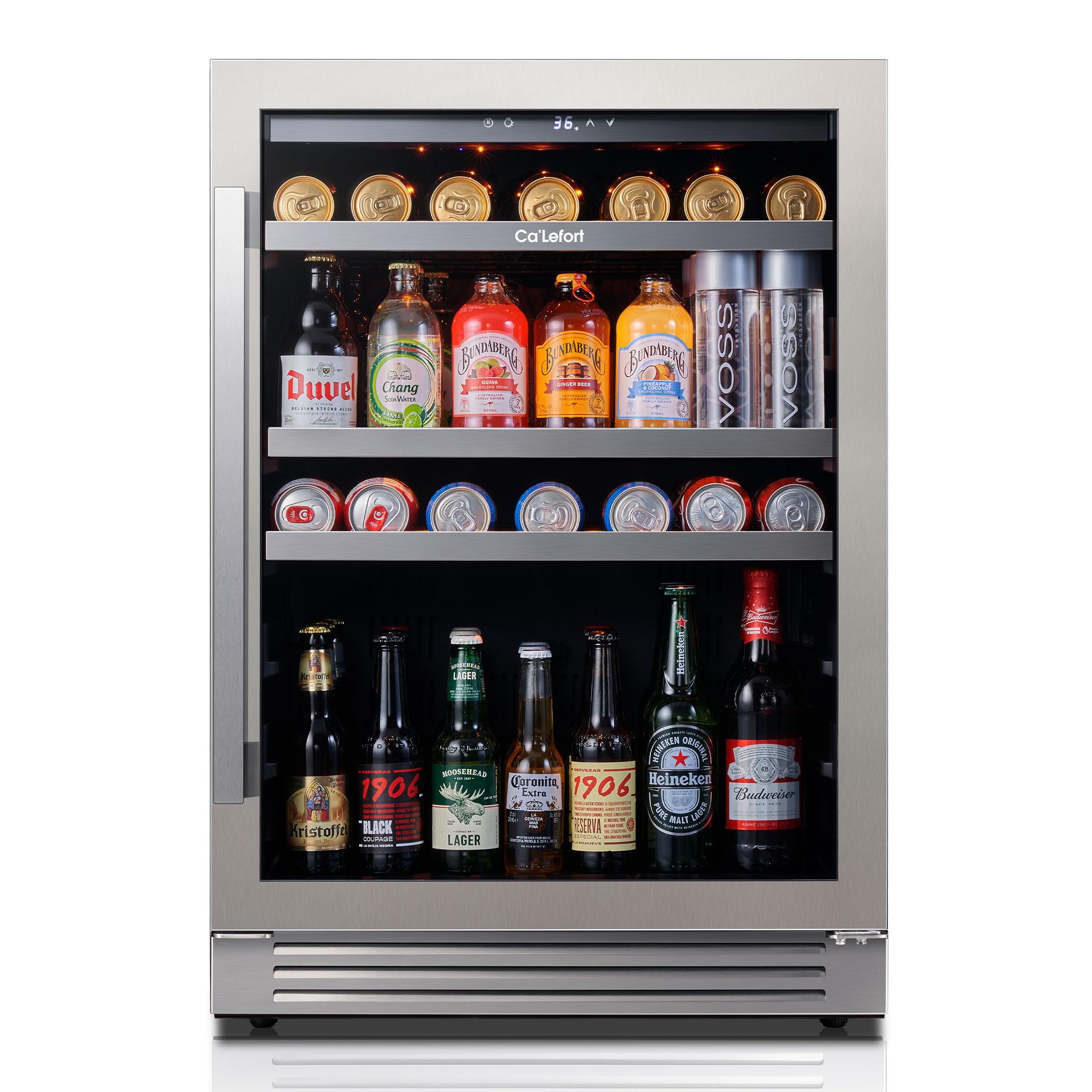
Ca’Lefort 180 Can Bev Fridge
Key Features
- Width: 23.4 in
- Capacity: 180 cans
- Min Temp: 34°F
- Door Type: Double-glazed + 304SS
- Noise: Quiet for most
- Price: $$$
The Ca’Lefort beverage refrigerator stands out with its three-color LED lighting (amber, blue, white) and a 304 stainless steel frame that gives the double-glazed glass door a premium look. This is a unit designed to be a visual centerpiece rather than just a storage appliance—a deliberate departure from the value-focused top pick that prioritizes quiet operation and affordability.
Cooling performance is generally solid, with the compressor maintaining temperatures between 34–54°F with 1°F precision. Most owners report quiet operation suitable for open-plan kitchens, though the auto light may be too dim or always-on for some preferences. The three adjustable wire shelves accommodate up to 180 cans.
This refrigerator suits design-conscious buyers who want a showpiece that matches their cabinetry and enjoy customizing the interior atmosphere with different light colors. However, long-term cooling consistency has been noted as a consideration: some units may stop cooling after extended use. For shoppers who prioritize reliability without service backup, the top pick offers stronger peace of mind at a lower price.
Pros
- Premium stainless steel frame and double-glazed glass door
- Customizable three-color LED lighting for interior ambiance
- Quiet compressor operation in most setups
Cons
- Auto light may appear too dim or stays on longer than desired
- Cooling performance can diminish in some units after months of use
Best for Compact Narrow
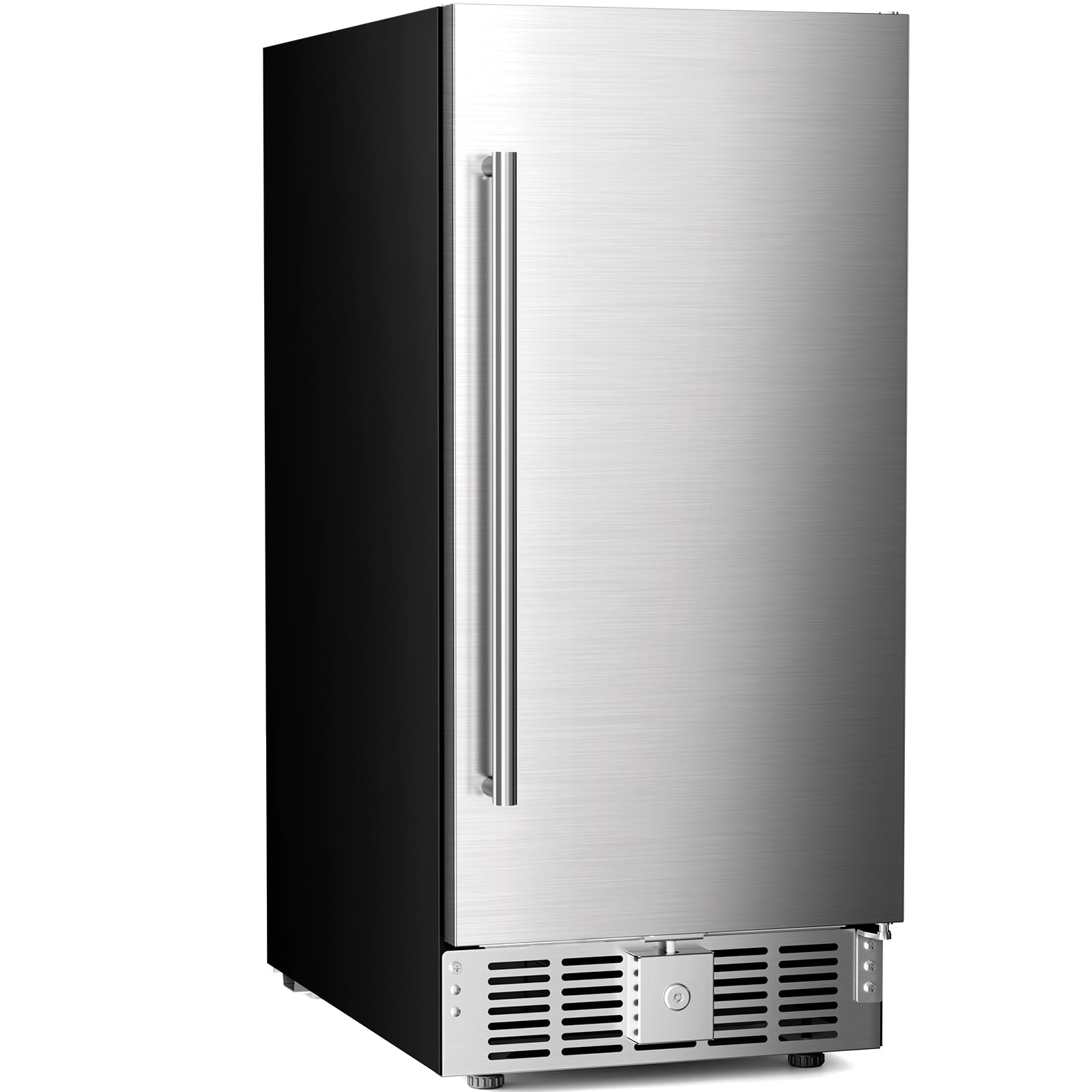
Antarctic Star 15in 135 Can
Key Features
- Width: 15 in
- Capacity: 135 cans
- Min Temp: 32°F
- Door Type: Stainless steel
- Noise: Some noise
- Price: $
The Antarctic Star 15-inch undercounter refrigerator holds 135 cans in a cabinet that fits spaces where standard 24-inch models won’t. At 15 inches wide, it slides into narrow cutouts under counters, in bars, or on patios where other beverage fridges simply don’t fit. The stainless steel door and adjustable shelving add basic functionality, but the real draw is the slim profile paired with solid capacity for its size.
This fridge suits buyers with a specific width constraint who want to keep drinks cold without spending much. The compressor cools to 32–50°F, adequate for sodas and beers but not for precise wine storage. The trade-off for the compact size is that the unit can produce noticeable compressor noise in quiet rooms, and condensation may appear on the stainless door in humid environments. For a garage, workshop, or outdoor bar where sound and humidity are less of a concern, these limitations are manageable.
Pros
- Fits in 15-inch cutouts where standard beverage fridges won’t.
- Stores 135 cans in a compact 3.7 cu ft interior.
- Temperature range from 32°F to 50°F covers most drink preferences.
Cons
- Compressor hum may be noticeable in quiet spaces – less of an issue in garages or patios.
- Stainless steel door can develop condensation in humid conditions.
Best for Budget Compact
Weili 20in Bev Fridge 120 Can

Key Features
- Width: 19.7 in
- Capacity: 120 cans
- Min Temp: 34°F
- Door Type: Triple-glazed glass
- Noise: Mostly quiet
- Price: $
This unit offers the lowest price point among beverage fridges and its 20-inch width slides neatly into narrow spaces where a standard 24-inch model won’t fit. However, it is not designed for standard undercounter cutouts — the 30.3-inch height leaves a noticeable gap in typical 34.5-inch openings, and the cooling range may not reach below 38°F, which limits use for those wanting very cold drinks or precise wine storage.
Pros
- Budget-friendly price for a 20-inch built-in beverage fridge.
- Narrow 19.7-inch width fits tight undercounter spaces where 24-inch models won’t go.
Cons
- 30.3-inch height leaves a gap in standard 34.5-inch undercounter openings — requires filler panel or open space.
- Cooling may not drop below 38°F, limiting use for very cold drinks or wine storage.
Best for Low Temp Control
Yeego 180 Can Bev Fridge

Key Features
- Width: 23.4 in
- Capacity: 180 cans
- Min Temp: 34°F
- Door Type: Double-layer glass right
- Noise: Loud for many
- Price: $$
The Yeego delivers the coldest drink temperatures of any model in this group, reaching a true 34°F, and its power-loss memory keeps your settings intact after an outage. The double-layer tempered glass door gives it a clean look. However, the compressor hum will be noticeable in quiet rooms, making it better for garages or basements. The door is right-hinged only, so check your clearance before buying.
Pros
- Maintains cold temperatures evenly throughout the interior
- Double-layer tempered glass door looks clean and modern
Cons
- Door cannot be reversed; requires right-side clearance for opening
- Compressor hum may be present in quiet rooms — less of an issue in garages or busy kitchens
How to Choose
The biggest mistake buyers make is assuming all 24-inch beverage fridges cool reliably — real-world performance varies wildly despite identical specs.
Width
Width determines where the fridge fits: 24-inch is the standard built-in size, but 15-inch and 20-inch models exist for narrow spaces. A 15-inch unit can slide into a tight gap but leaves substantial empty space in a standard 34.5-inch cabinet opening — you’ll need filler strips.
That filler is cosmetic but adds cost and may collect dust. Measure your cutout precisely before choosing, because swapping widths later means new cabinetry.
Capacity
Capacity is listed as can count, but the actual number depends on can size and stacking. Models in the 180–210 can range can serve a party, while 120-can units suit a secondary bar. More capacity means more weight on shelves — wire shelves can sag over time under heavy loads.
Check if shelves are adjustable and removable for cleaning. Some models have sliding glides that can jam under weight; fixed shelves are simpler.
Minimum Temperature
Most specs claim a range like 34–65°F, but real-world minimums often land 2–4°F higher. Compressors struggle when ambient temperature exceeds 90°F or if airflow is restricted. If you need truly cold soda (below 38°F), look for models where owners confirm reaching 34°F consistently.
Dual-zone units can keep wine at 55°F while chilling beer to 38°F in the same appliance, but the compressor cycles to maintain both zones, which can shorten its lifespan.
Door Type
Glass doors let you see contents without opening, but they let in ambient heat. Double-glazed low-E glass reflects infrared radiation, reducing energy loss by up to 30% compared to single-pane. Solid stainless doors hide contents but offer better insulation and fewer condensation issues in humid climates.
A reversible door hinge (left or right) offers installation flexibility — critical if your kitchen layout dictates the opening side. Non-reversible models limit placement options and can’t be swapped later.
Noise Level
Compressor noise comes from the motor, fan, and vibration. Units with better insulation and balanced compressors run near-silent (20–30 dB), while budget models can produce a noticeable hum or high-pitched whine. Noise tolerance is personal — a fridge in a closed cabinet is less bothersome than one in an open kitchen.
Check owner feedback for the specific phrase ‘noise level’ rather than overall rating. A 4.4-star fridge can still have a 25% dissatisfaction rate on noise.
FAQ
Why does my built-in beverage refrigerator not cool below 40 degrees?
This typically happens when the compressor cannot overcome the ambient temperature or when airflow is blocked. Check that front ventilation grilles are clean and the room temperature is below 90°F. If the unit is new, it may need 24 hours to stabilize. Persistent failure to cool below 40°F often points to a faulty thermostat or compressor — a sign to replace rather than repair, given typical unit costs.
Can a 15-inch beverage refrigerator fit in a standard 24-inch kitchen cabinet opening?
No — the 15-inch width will leave 9 inches of gap. You would need custom filler strips or a cabinet modification to close the space, which is visually noticeable and may collect debris. A 20-inch model fits a 24-inch opening with a smaller gap, but still requires filler. For a clean built-in look, stick to 24-inch wide units.
Is a glass door beverage fridge more energy inefficient than a solid stainless steel door?
Yes, glass doors generally let in more heat than insulated stainless steel. However, double-glazed low-E glass reduces this difference to about 10–15% in real-world usage. The trade-off is visibility and aesthetics versus slightly higher electricity cost. For most buyers, the convenience of seeing drinks outweighs the minimal energy impact.
How many years should a compressor beverage refrigerator last before needing repair?
A well-built unit should last 3 to 5 years with normal use. Budget models often fail within 2 years, while premium units with better compressors can reach 6–7 years. Most failures are compressor or thermostat related — repairs cost nearly as much as a new fridge, so replacement is often the practical choice.