This post contains affiliate links. We may earn a small commission when you buy through our links — at no extra cost to you.
A high price tag on a glass rinser doesn’t guarantee a metal body. Many popular models use plastic internals and housings, while lesser-known brands deliver full stainless steel at half the cost. That mismatch between expectation and reality frustrates wine lovers who rinse stemware daily and expect durability.
The right rinser should fit a standard soap dispenser hole, fire a powerful spray without splashing, and stay leak-free after hundreds of uses. For the home entertainer who pours multiple varietals a night, quick rinsing between glasses means more time with guests and less at the sink.
Some models double as a pull-out sink sprayer or include a childproof lock, but those extras often demand careful sealing or a specific sink setup. Knowing which trade-offs matter for your kitchen helps you avoid a device that works great on day one but drips on day thirty.
Top Picks
Best for Frequent Hosts
Delta GR150-SP

Key Features
- Material: Plastic with SpotShield finish
- Sink Hole Compatibility: Standard 1-1/4″ hole
- Safety Lock: No
- Included Components: Supply line, T‑adapter, cover
- Price: Premium
Installing the Delta GR150-SP takes about 15 minutes using the existing soap dispenser or sprayer hole — no drilling or special tools required. The 1.2 GPM spray quickly rinses residue from wine glasses, baby bottles, and travel mugs with a focused stream that minimizes splashing. The SpotShield finish helps keep the unit looking clean between uses.
This rinser suits wine enthusiasts and frequent hosts who rinse many glasses daily. The included T-adapter and supply line simplify hookup, and the finish matches existing Delta fixtures for a cohesive kitchen look. The plastic body may not satisfy those expecting a full metal feel at this price, but the rinsing performance and hassle-free installation make it a practical choice for the target audience.
Pros
- Installs in about 15 minutes using an existing soap dispenser or sprayer hole — no drilling needed.
- Powerful spray rinses wine glasses, baby bottles, and travel mugs with minimal effort.
- SpotShield finish resists water spots and coordinates with other Delta fixtures.
Cons
- Plastic body feels less premium than metal alternatives at this price point.
Best for Diy Homeowners
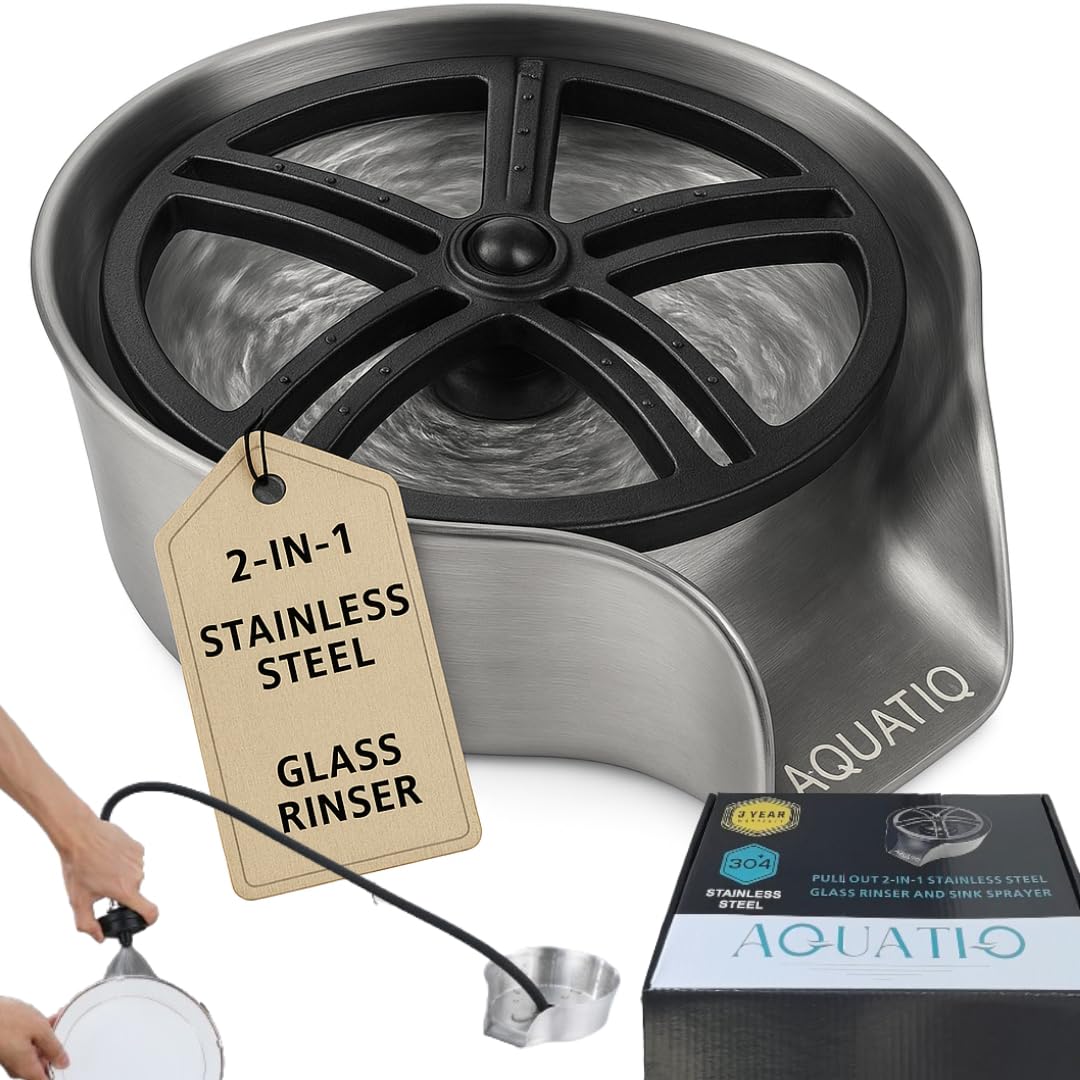
AquatiQ Rinser Duo
Key Features
- Material: 304 Stainless Steel
- Sink Hole Compatibility: Standard single hole
- Safety Lock: No
- Included Components: Rinser, sprayer, braided hose, T‑adaptor, gaskets
- Price: Mid-Range
The AquatiQ Rinser Duo pairs a 304 stainless steel body with a retractable pull-out sprayer, giving you two sink functions in one fixture — a material step up from plastic-only rinsers. Sealing the connections can be finicky; some installations need retightening or aftermarket adapters to stop drips. DIY-savvy buyers who value metal build and the sprayer convenience will find the extra setup acceptable. Those wanting a leak-free experience right out of the box may prefer the fuss-free top pick.
Pros
- Stainless steel body feels solid for a mid-range price, outlasting plastic alternatives.
- Pull-out sprayer extends functionality to sink edges and large items, reducing the need for a separate side sprayer.
- Installation is straightforward into standard countertop holes, with a T-adaptor and braided hose included.
Cons
- Sealing may require extra tightening or aftermarket adapters to prevent drips, adding a step to the install process.
Best for Cost-Conscious Buyers
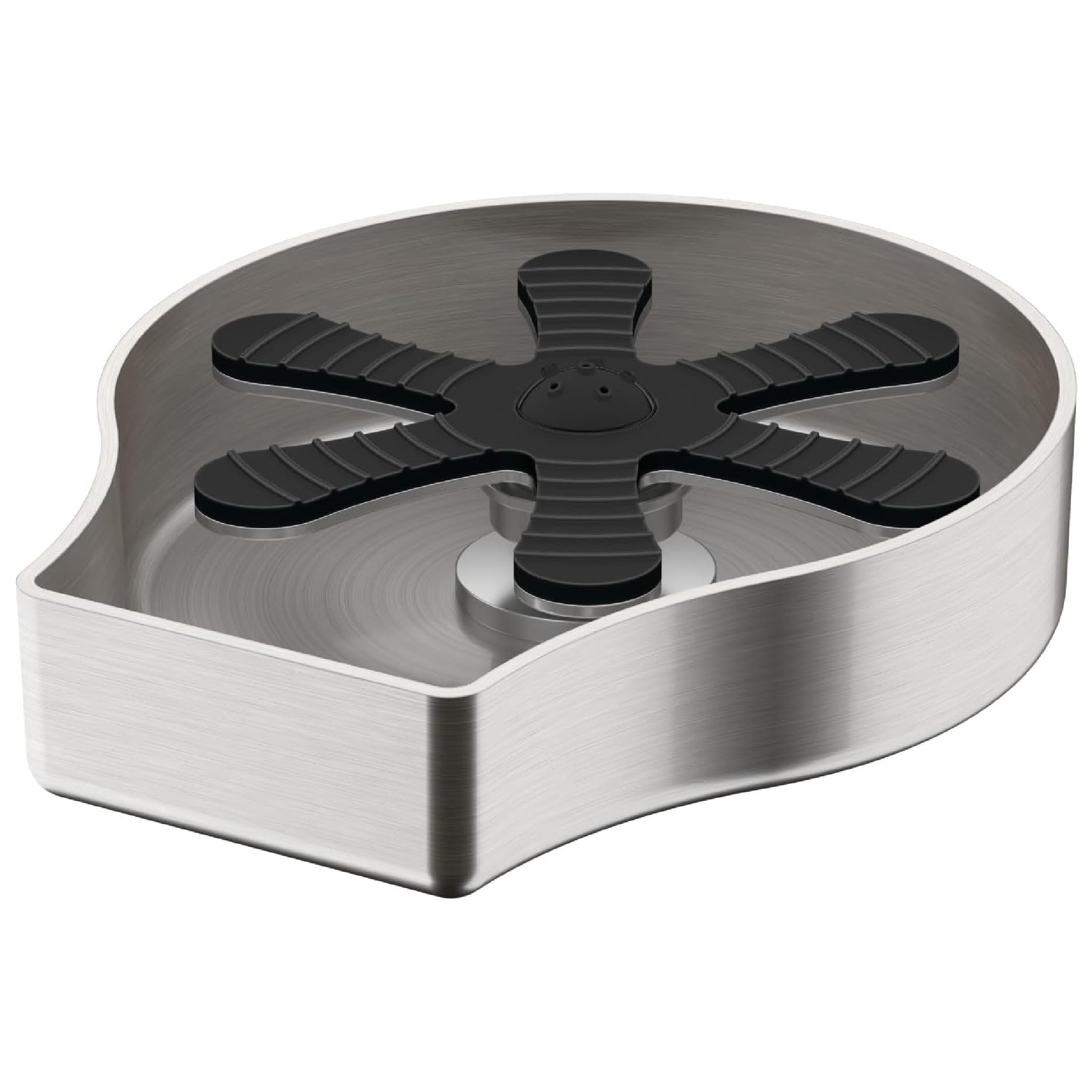
Homewerks GR001SS
Key Features
- Material: Stainless Steel
- Sink Hole Compatibility: Standard single hole
- Safety Lock: No
- Included Components: Installation hardware, sprayer
- Price: Budget
The Homewerks GR001SS swaps the plastic body of the top-rated Delta rinser for solid stainless steel, giving it a heft and durability that feels a step above its price. The 1.8 GPM spray blasts residue from bottles, wine glasses, and sippy cups quickly, and the single-hole deck mount installs in an existing soap dispenser cutout with basic tools.
It’s targeted at cost-conscious buyers who want metal over plastic and don’t need a safety lock or spot-free finish. Renters and families with babies get a simple, effective bottle-cleaning station without complex plumbing, while those needing extra safeguards or pristine aesthetics will find those in pricier models.
Pros
- All-stainless-steel construction delivers a premium feel at a budget-friendly price.
- Strong 1.8 GPM jet quickly rinses residue from bottles, glasses, and baby gear.
- Tool-free installation into a standard soap dispenser hole with included hardware.
Cons
- Stainless steel surface has no spot-free coating, so water spots may accumulate after use.
Best for Safety-Focused Families
Kraus CleanMate KGR-500SFS

Key Features
- Material: Plastic with Spot-Free finish
- Sink Hole Compatibility: Standard 1-1/4″ hole
- Safety Lock: Yes, 1/8‑turn lock
- Included Components: Quick‑connect water line, tee, optional spacer
- Price: Mid-Range
What sets the Kraus CleanMate apart is its integrated 1/8-turn safety lock, which prevents accidental activation—a feature missing from most rinsers. The spot-free finish resists water spotting and coordinates directly with Kraus fixture families, an advantage for buyers who want a cohesive look under a single brand.
The trade-off is an all-plastic body. Over time, the spray actuator can become sticky, leading to occasional unplanned spraying or reduced smoothness. This is a manageable compromise for households that value the safety lock and matching finish and don’t require a metal build for long-term resilience.
Pros
- Powerful rinsing action clears residue from various drinkware sizes, including tall bottles.
- Quick-connect installation gets the rinser running in minutes with minimal plumbing effort.
- Safety lock prevents unintentional spray, protecting cabinets and countertops from water damage.
Cons
- The all-plastic body may feel less substantial and can show wear at connection points over extended use.
- Spray actuator can become sticky, causing occasional unintended sprays or hesitation.
Best for Home Bar Builders
YBB Rinser SV-125

Key Features
- Material: Stainless Steel
- Sink Hole Compatibility: Requires 7×6″ cutout
- Safety Lock: No
- Included Components: Pitcher rinser only
- Price: Premium
The YBB rinser’s stainless steel square basin fits a custom 7×6-inch countertop opening, creating a dedicated rinsing spot for home bars or light commercial use. Installation demands cutting an opening and plumbing a separate drain line, and without owner feedback, long-term performance under daily kitchen use remains an open question.
Pros
- Stainless steel basin stands up to frequent rinsing of heavy glassware.
- Square shape uses tight bar-corner space efficiently.
Cons
- Requires cutting a roughly 7×6-inch countertop opening and running a separate drain line—not a drop-in sink replacement.
Best for Custom Wet Bars
YBB Rinser SV-168

Key Features
- Material: 304 Stainless Steel, black
- Sink Hole Compatibility: Requires 12.7×6.4″ cutout
- Safety Lock: No
- Included Components: Pitcher rinser only
- Price: Luxury
The 13-inch stainless deck accommodates multiple glasses or decanters at once, ideal for upscale wet bars. Installation demands cutting a precisely sized opening and plumbing a dedicated drain line — this is a built-in component for planned countertops, not a drop-in sink accessory.
Pros
- Trough design rinses multiple glasses or large decanters in a single press.
- Black 304 stainless steel construction resists corrosion and blends into high-end bar setups.
Cons
- Necessitates a large countertop cutout (approx. 13 in. by 6.4 in.) and a plumbed drain, and will not work with existing sink holes.
How to Choose
The most critical factor for a sink cup rinser isn’t price—it’s whether the materials and seals can handle the daily abuse of rinsing wine glasses without leaking or degrading.
Material
Plastic bodies are lighter and often include spot-resistant finishes, but they can crack over time or feel less substantial under your palm. Metal (usually stainless steel) resists dings and holds up better against acidic wine residues, though inexpensive metal units may still ship with cheap plastic internals.
Wine lovers who rinse dozens of glasses nightly may prefer a metal top tray that won’t etch from residual tannins, even if the base is plastic.
Sink Hole Compatibility
Most residential rinsers drop into a standard 1-1/4″ soap dispenser or sprayer hole and connect to the cold water line with a single tee. Commercial-style units like the YBB SV series require a large countertop cutout and a drain line—a project that demands cutting your sink or counter.
If your sink already has a spare hole, a standard deck-mount unit installs in 15 minutes with basic tools.
Flow Rate and Spray Pattern
Flow rates range from 1.2 to 1.8 GPM. Higher flow clears residue faster but can cause splashback with narrow wine glasses, while lower flow with multiple fine jets gives more controlled cleaning. A rinser with at least 6–8 jets covers the bowl of a stemmed glass without wasting water.
An overly strong single jet can push a delicate glass sideways; multi-nozzle patterns distribute force and rinse evenly.
Safety Lock
A twist-lock prevents accidental activation—essential if small children reach the sink or if you store cleaning tools nearby where a stray bump could unleash spray. The trade-off is one extra step each time you use it, and some locks add plastic components that are themselves a point of failure.
Installation Components
Many kits include a plastic T-adapter and rubber gaskets. Plastic adapters can strip or crack after repeated tightening, leading to a slow leak under the sink. Spending $5 on a brass T-adapter at the hardware store during install eliminates that risk entirely.
A braided supply line and brass compression fittings are the markers of a kit designed for long-term leak-free service.
FAQ
Why does my glass rinser spray water everywhere when I press down?
A sudden spray explosion usually means the actuator valve is sticking or debris is lodged in the nozzle jets. Remove the top tray and clean the rubber seal and all openings with a soft brush; if the problem persists, the internal spring may be misaligned. In most cases, a thorough cleaning restores a controlled shower.
Can I install a glass rinser in a sink that only has a soap dispenser hole?
Yes, virtually all residential rinsers are designed to drop into that exact 1-1/4″ hole. You disconnect the soap bottle, remove the dispenser, and mount the rinser in its place with the included hardware. The process takes about 15 minutes and only requires an adjustable wrench and plumber’s tape.
Is a plastic glass rinser durable enough for daily use rinsing wine glasses?
Top-tier plastic rinsers like Delta’s hold up for years of daily use without cracking, but they can feel less substantial and may show scratches sooner than stainless steel. If you prioritize a premium feel and worry about long-term etching from wine acids, a metal-bodied model is a safer bet.
Why is my cup rinser leaking from underneath the counter?
Under-sink leaks almost always trace back to the T-adapter connection. First, tighten the compression nuts with an adjustable wrench while holding the adapter steady; if that doesn’t work, replace the plastic adapter with a brass version and add a fresh wrap of plumber’s tape. A few dollars spent on a brass adapter avoids a swollen cabinet base.