This post contains affiliate links. We may earn a small commission when you buy through our links — at no extra cost to you.
The first few squeezes of a new citrus juicer feel satisfying—until months later when the coating flakes into your drink or the handle cracks mid-squeeze. It’s a pattern that plays out across budget and mid-range models alike: painted aluminum chips, plastic gears wear, and hinge pins slip loose.
The real divide isn’t manual versus electric—it’s the material under the handle. Full stainless steel construction avoids the coating failures that plague most sub-25-dollar juicers, but it costs more and may not fit every fruit size. Lever-style presses deliver more juice with less hand strain, yet their plastic components can become the weak link over time.
This guide cuts through the marketing claims to focus on the trade-offs that actually matter for cocktail prep: material durability, juice yield, and whether a model fits your most-used citrus. The goal is to match your frequency and fruit size to a tool that won’t let you down mid-season.
Top Picks
Best for Frequent Home Bartenders
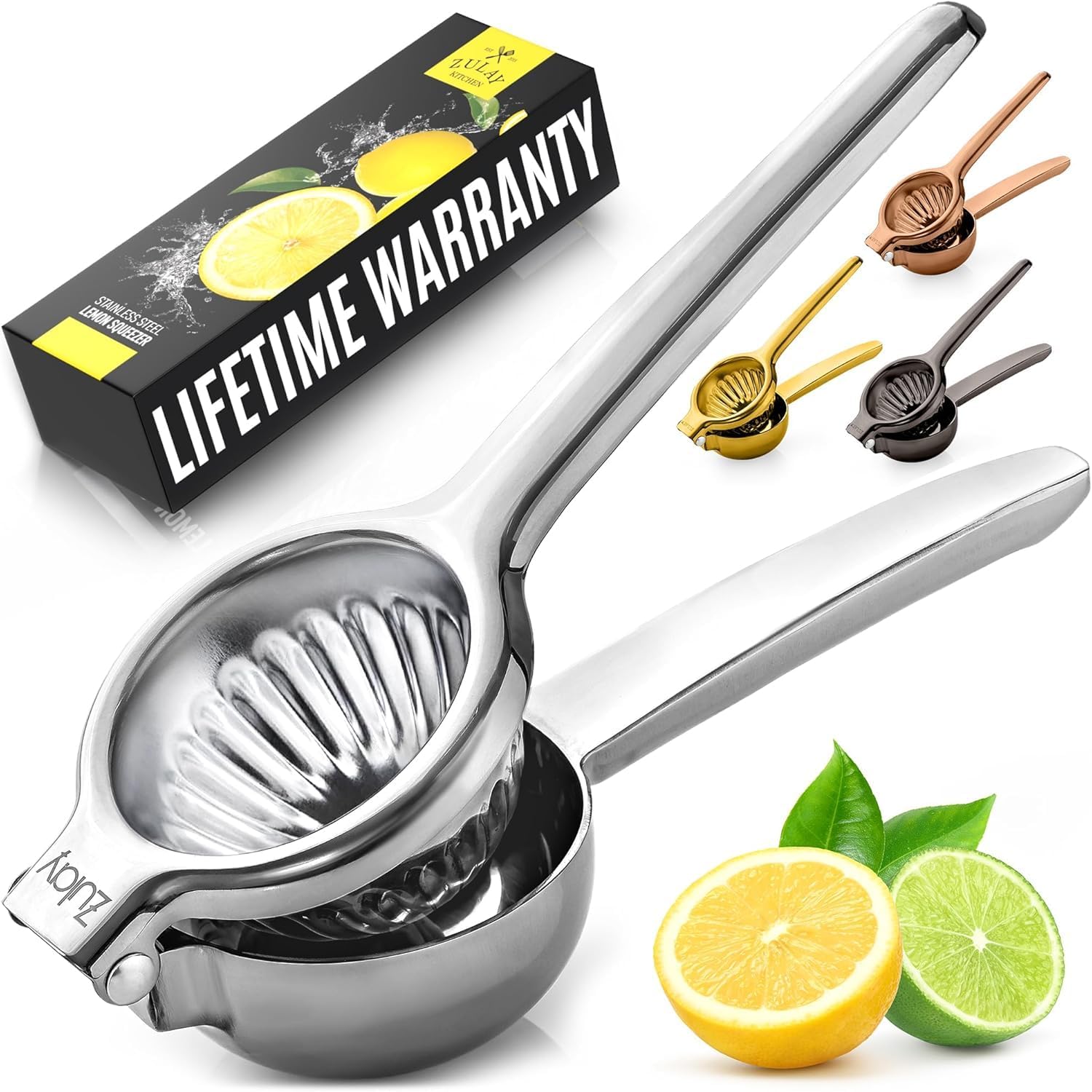
Zulay Kitchen Stainless Steel Lemon Squeezer
Key Features
- Construction Material: 18/8 Stainless Steel
- Extraction Mechanism: Hand press
- Capacity: 0.5 Liters
- Cleaning & Care: Dishwasher safe
- Durability: Metal, lifetime warranty
- Price: $$
The Zulay Kitchen stainless steel squeezer is built from 18/8 grade steel with no coatings or plastics, giving it a substantial heft that resists flexing during use. The solid metal bowl and handle feel like they will outlast any plated or aluminum alternative. Cleanup is straightforward — the unit is dishwasher safe, though hand washing maintains the handle finish longer.
Juice extraction from lemons, limes, and small oranges is efficient, with the reamer pressing the fruit fully against the bowl to release nearly every drop. The leverage design requires moderate hand force — less than many reamer-style juicers. For very large lemons, the bowl clearance may leave a small amount of juice inside the rind, a tradeoff that matters most when juicing oversized fruit.
The full stainless steel construction distinguishes this squeezer from cheaper options that use coated aluminum or plastic. Those alternatives can chip, peel, or crack over time, especially if run through the dishwasher. The Zulay model avoids those failure modes entirely, making it a more cost-effective choice for anyone who plans to juice regularly.
This squeezer is best for home bartenders who want a manual press that avoids the chipping and cracking common in coated or plastic models. It suits frequent juicing of standard lemons and limes, and occasional small oranges. Buyers who need to process large oranges or grapefruit, or who prefer an electric juicer for high volume, should look elsewhere.
Pros
- Full stainless steel construction with heavy-duty feel, no coating to chip
- Sturdy and durable for frequent use, feels built to last
- Effective juice extraction from lemons, limes, and small oranges with minimal effort
- Dishwasher safe for easy cleanup
- Backed by a lifetime warranty for peace of mind
Cons
- Handle coating may split after prolonged use or dishwasher cleaning, though metal remains functional
- Bowl clearance may leave some juice in very large lemons; not suitable for large oranges or grapefruit
Best for Max Juice Yield
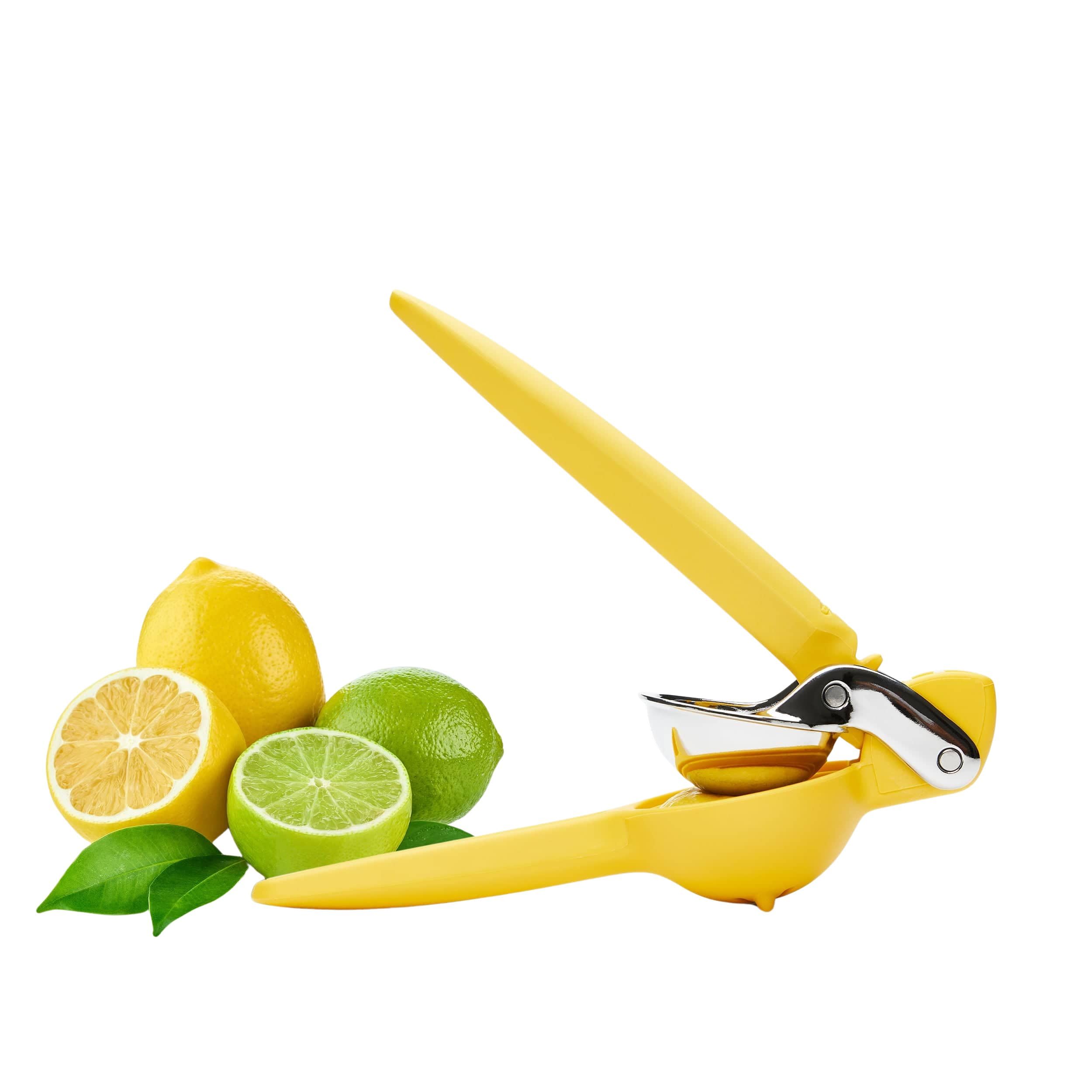
Chef’n FreshForce Lemon Squeezer
Key Features
- Construction Material: Nylon & Stainless Steel
- Extraction Mechanism: Dual-gear press
- Capacity: 0.8 Liters
- Cleaning & Care: Dishwasher safe
- Durability: Plastic gears wear over time
- Price: $$
The dual-gear leverage system is the standout here — it multiplies hand force so you get noticeably more juice from limes and small lemons than with a standard press. The comfortable non-slip handles and smooth action make quick work of a dozen limes for a round of margaritas.
For the home bartender who juices a few limes or lemons a week, this press feels well-constructed and delivers consistent results. The basket size is a meaningful constraint, however: it handles small to medium lemons comfortably, but large supermarket lemons or oranges will need to be cut smaller or left for another tool.
Best suited for cocktail enthusiasts who value maximum yield and have hand pain or arthritis — the gear mechanism reduces strain significantly. Be aware that the plastic gears can wear after a year or two of regular use, and the basket won’t accept larger citrus. If you juice mostly limes and small lemons and treat this as a dedicated cocktail tool rather than a kitchen workhorse, it earns its place on the bar cart.
Pros
- Dual-gear design extracts up to 20% more juice than standard lemon squeezers.
- Reduces hand strain significantly, helpful for users with arthritis or weak grip.
- Comfortable non-slip handles make pressing effortless for most users.
- High build quality relative to other plastic presses in this price tier.
Cons
- In households that make cocktails most nights, the plastic gears can show wear after a year or two.
- The basket is sized for limes and small lemons — large lemons and oranges require trimming or don’t fit.
Best for Mess-Free Kitchen Use
OXO Good Grips 2-in-1 Citrus Juicer

Key Features
- Construction Material: BPA-free Plastic
- Extraction Mechanism: Hand press with two reamers
- Capacity: 350 ml
- Cleaning & Care: Dishwasher safe
- Durability: Plastic may warp under force
- Price: $$
The OXO Good Grips 2-in-1 stands apart from metal presses by solving the mess problem: its built-in measuring cup catches juice directly, and the drip-free spout pours cleanly into a glass. For cocktail-making where lemons and limes are the main squeeze, this design keeps counters dry and cleanup quick. Where the top pick’s stainless build guarantees enduring toughness, the OXO’s plastic body is more about convenience than longevity.
This juicer is best suited for home cooks who prioritize a tidy, low-effort routine over brute strength. The two included reamers handle both small and medium lemons and limes well, and the integrated seed strainer works without clogging. The plastic construction does mean you need to apply moderate force — pressing too hard on a dense orange may flex or warp the body over time, so stick to softer citrus for consistent performance.
Dishwasher-safe parts and a simple two-piece assembly make post-cocktail cleanup trivial. Juice yield from lemons and limes is high, with the reamer extracting nearly every drop. The measuring cup’s clear markings let you pour precisely, which is handy for balancing a margarita or sour. Just keep expectations in check: this is not built for heavy daily use or large grapefruit — that’s the domain of all-stainless presses.
Pros
- Mess-free operation with built-in measuring cup and drip-free spout
- Easy to use and clean with dishwasher-safe parts
- Excellent juice yield from lemons and limes
Cons
- Under firm pressure, the plastic body may flex or warp — best for gentle squeezing of soft citrus
- Bowl and reamer size limit fruit to lemons and limes; large oranges or grapefruit won’t fit
Best for Budget-Conscious Users
Zulay Kitchen 2-in-1 Squeezer

Key Features
- Construction Material: Coated Aluminum
- Extraction Mechanism: Hand press
- Capacity: 0.5 Liters
- Cleaning & Care: Dishwasher safe
- Durability: Coating chips over time
- Price: $
Zulay Kitchen’s 2-in-1 squeezer is the budget-friendly alternative that still delivers effective juice extraction, backed by an enormous user base. While the stainless steel model in this lineup avoids coating issues, this version offers similar functionality at roughly half the cost — with the tradeoff that the painted aluminum coating can chip over time, especially with aggressive cleaning or hard fruits.
This juicer suits home bartenders who need an affordable tool for weekend cocktails and occasional lemonade. The coating wear is a non-issue for those who treat it as a consumable kitchen tool; for heavy daily use or a lifetime investment, the full stainless steel model is the better choice.
Squeezing effort is minimal thanks to the ergonomic handles, and the two reamer sizes handle both small limes and large lemons. The juice yield is high, with reviewers noting they get every last drop. Cleanup is quick — the squeezer is dishwasher safe, though hand washing helps preserve the coating longer.
Pros
- Exceptional value for the price among manual citrus juicers.
- Effortless squeezing with great juice yield.
- Easy to clean and dishwasher safe.
Cons
- Painted aluminum coating may chip or wear over time, exposing raw metal.
Best for One-Handed Operation
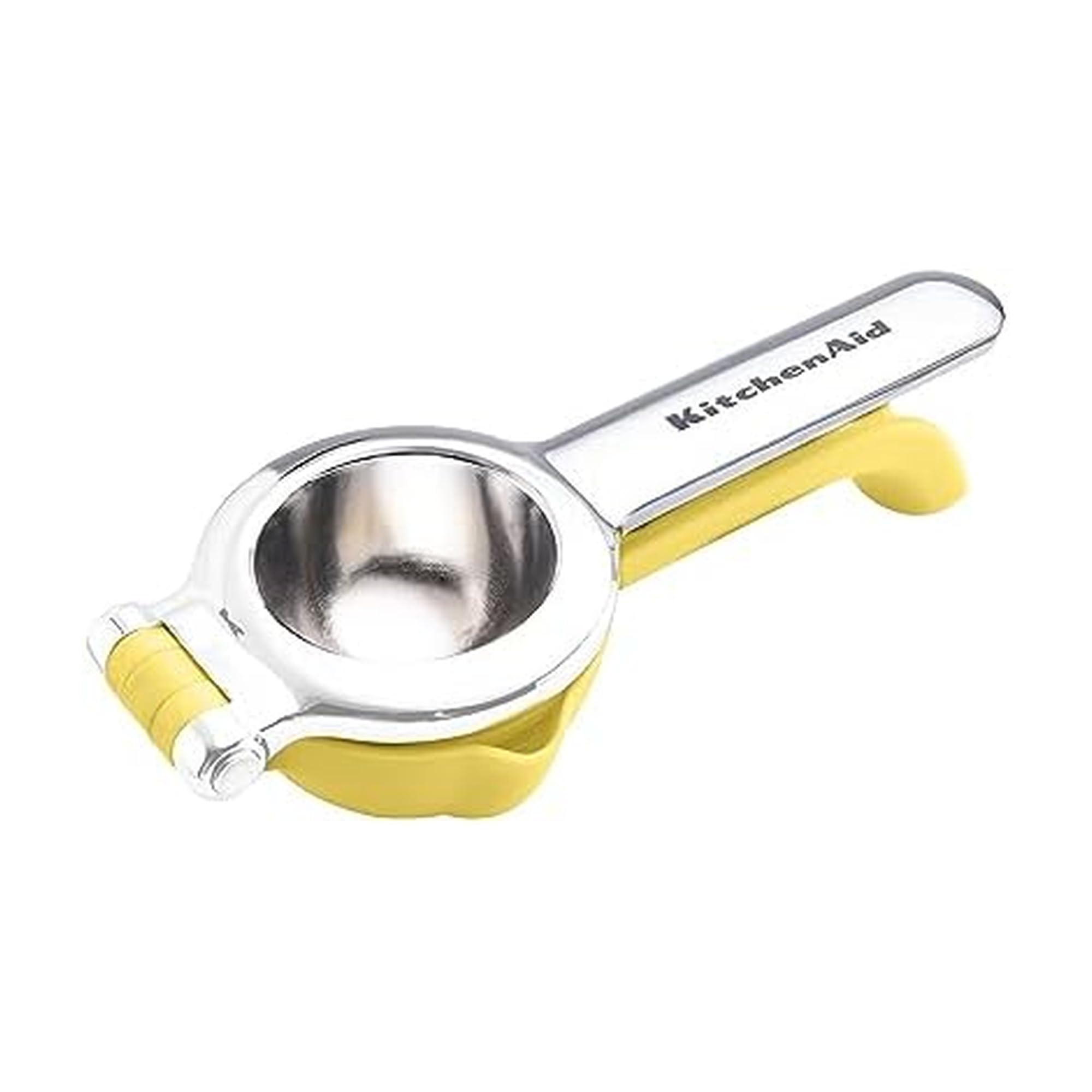
KitchenAid Citrus Juice Press
Key Features
- Construction Material: Aluminum & Nylon
- Extraction Mechanism: Countertop lever press
- Capacity: 0.5 Liters
- Cleaning & Care: Dishwasher safe
- Durability: Plastic handle may crack
- Price: $$
The KitchenAid Citrus Juice Press uses a lever mechanism that lets you press with one hand, using body weight instead of grip strength — a genuine advantage for anyone who finds standard reamers tiring. The built-in strainer and pour spout channel juice directly into a glass or measuring cup, keeping seeds and pulp out of the drink. This design is a clear departure from the full stainless steel press that tops our list, trading material purity for ergonomic convenience.
This press is best for cocktail makers who primarily work with lemons and limes — its reamer is too small for oranges or grapefruit, so those larger fruits are off the table. The real compromise here is the plastic-and-aluminum construction: the handle and strainer can develop cracks after several months of frequent use. That’s a non-issue for light or occasional juicing, but if you plan to squeeze a dozen limes every weekend, the plastic parts may wear faster than you’d like.
The countertop press stays put during operation, which is a plus for messy bar setups, and the aluminium body feels solid in the hand. Dishwasher cleaning is fine for the metal parts, but hand-washing the plastic strainer and handle can extend their lifespan. For someone with arthritis or weak hands who needs lemon or lime juice for weekly cocktails, this press offers a comfortable shortcut the all-metal competition can’t match.
Pros
- Lever design allows one-handed pressing with body weight, reducing hand strain.
- Built-in strainer and pour spout keep seeds out and minimize mess.
- Solid aluminum body with a high-quality feel for a mid-range price.
Cons
- Plastic handle and strainer may crack after several months of regular use.
- Reamer is too small for oranges or grapefruit — only suits lemons and limes.
Best for Electric Convenience
Elite Gourmet Electric Citrus Juicer

Key Features
- Construction Material: Plastic & Stainless Steel
- Extraction Mechanism: Electric reamer
- Capacity: 24 oz (3 cups)
- Cleaning & Care: Top-rack dishwasher safe
- Durability: Motor/plastic fail within months
- Price: $
The Elite Gourmet electric juicer turns citrus into juice with one button press. Its 40W auto-reversing motor spins the reamer in both directions, squeezing each half quickly without needing to manually twist or press. For cocktail prep — where you need a few ounces of lemon or lime juice in a hurry — this saves real time compared to hand-squeezing. The 24-ounce bowl holds enough for a batch of margaritas, and the pulp control dial lets you choose how much texture makes it into the glass.
That speed comes with a short-term ownership horizon. The plastic bowl and motor components are not built for heavy rotation — some users have found the motor stalls after several months of regular use, and the bowl can develop hairline cracks if over-tightened or exposed to oversized fruit. For someone making a handful of cocktails each week, these issues are unlikely to surface quickly. But if you plan to juice multiple grapefruits daily, the motor strain will show up sooner.
This juicer is a good fit for home bartenders who want electric convenience without a large investment. It handles lemons, limes, oranges, and even smaller grapefruits effortlessly. The tradeoff is clear: you’re buying speed and low upfront cost, and in return you should expect a lifespan of one to two years of occasional use. If you’d rather invest in something that lasts a decade, the top-pick stainless steel manual juicer in this guide is the better choice.
Pros
- Electric operation juicers oranges and lemons in seconds — no manual squeezing required.
- Budget-friendly price under $15 makes it the most affordable electric citrus juicer available.
- Pulp control dial and efficient reamer extract nearly every drop of juice.
Cons
- Plastic bowl may crack after extended use with large or hard citrus fruit.
- Motor can stall after several months of regular use, especially with dense fruit or continuous operation.
Best for Large Citrus
RCMo Stainless Steel Lemon Squeezer

Key Features
- Construction Material: 304 Stainless Steel
- Extraction Mechanism: Hand press
- Capacity: 0.5 Liters
- Cleaning & Care: Dishwasher safe
- Durability: Metal, large bowl gap
- Price: $$
The RCMo squeezer offers the largest bowl in this set, easily handling big lemons and small oranges without forcing the fruit. The all-metal build with silicone handles feels sturdy and cleans up well in the dishwasher. However, the gap between the pressing bowls can leave roughly 15-20% of juice behind on some fruits — a notable shortfall for cocktail makers who need every drop. The size also feels bulky for standard limes, making this a better fit for those who work with larger citrus and can accept a modest yield loss.
Pros
- Heavy-duty all-metal construction with a premium feel
- Large bowl accommodates big lemons and small oranges
- Easy to clean and dishwasher safe
Cons
- Large gap between bowls may leave 15-20% of juice unextracted on some fruits — noticeable when making cocktails where every drop counts
- Oversized for standard limes — better suited to larger citrus
Best for Traditional Reamer Style
Etinslant Hand Juicer

Key Features
- Construction Material: 304 Stainless Steel
- Extraction Mechanism: Reamer with strainer
- Capacity: 10 oz (300 ml)
- Cleaning & Care: Dishwasher safe
- Durability: Metal, small bowl
- Price: $
The Etinslant Hand Juicer delivers genuine 304 stainless steel construction at an entry-level price, a rarity in manual juicers where coated metal or plastic is common. Its integrated strainer and dual pour spouts make juicing lemons or limes for a cocktail or two a tidy process. However, the 10 oz bowl fills quickly when juicing multiple fruits — frequent emptying is needed for batch work. Additionally, the reamer rotation requires more hand effort than lever-style presses, noticeable when juicing several citrus. This juicer suits cocktail makers who need a durable, simple tool for small quantities but isn’t ideal for those making large pitchers or preferring less hand strain.
Pros
- Full 304 stainless steel build at a budget-friendly price — no coating to chip or rust.
- Integrated strainer and dual pour spouts keep pulp and seeds out while transferring juice cleanly.
- Dishwasher safe and easy to hand-clean, with no crevices that trap residue.
Cons
- 10 oz bowl fills quickly during batch juicing — requires frequent emptying when making multiple drinks.
- Reamer style demands more hand force than lever presses, noticeable after juicing several fruits.
Best for Vintage Bar Decor
TableCraft Glass Juicer

Key Features
- Construction Material: Glass
- Extraction Mechanism: Hand press
- Capacity: 0.75 Liters
- Cleaning & Care: Hand wash recommended
- Durability: Glass cracks in dishwasher
- Price: $$
The TableCraft H223 brings a vintage elegance to the home bar with its clear glass body, sturdy handle, and pour spout. It looks the part of a classic citrus squeezer and feels substantial in hand. However, this is a product best appreciated for its appearance rather than its practicality. The glass construction, while attractive, can crack in the dishwasher despite being labeled dishwasher safe — hand washing is the safer route. There is also no built-in seed strainer, so seeds may end up in your cocktail mix. For light, occasional use and a decorative touch, it works well; for regular juicing or convenience, look elsewhere.
Pros
- Beautiful vintage aesthetic that looks great on a bar
- Heavy glass construction feels sturdy and substantial
Cons
- Glass can crack in the dishwasher despite being labeled dishwasher safe
- No seed strainer, so juice may contain seeds
Best for Budget Sturdy Feel
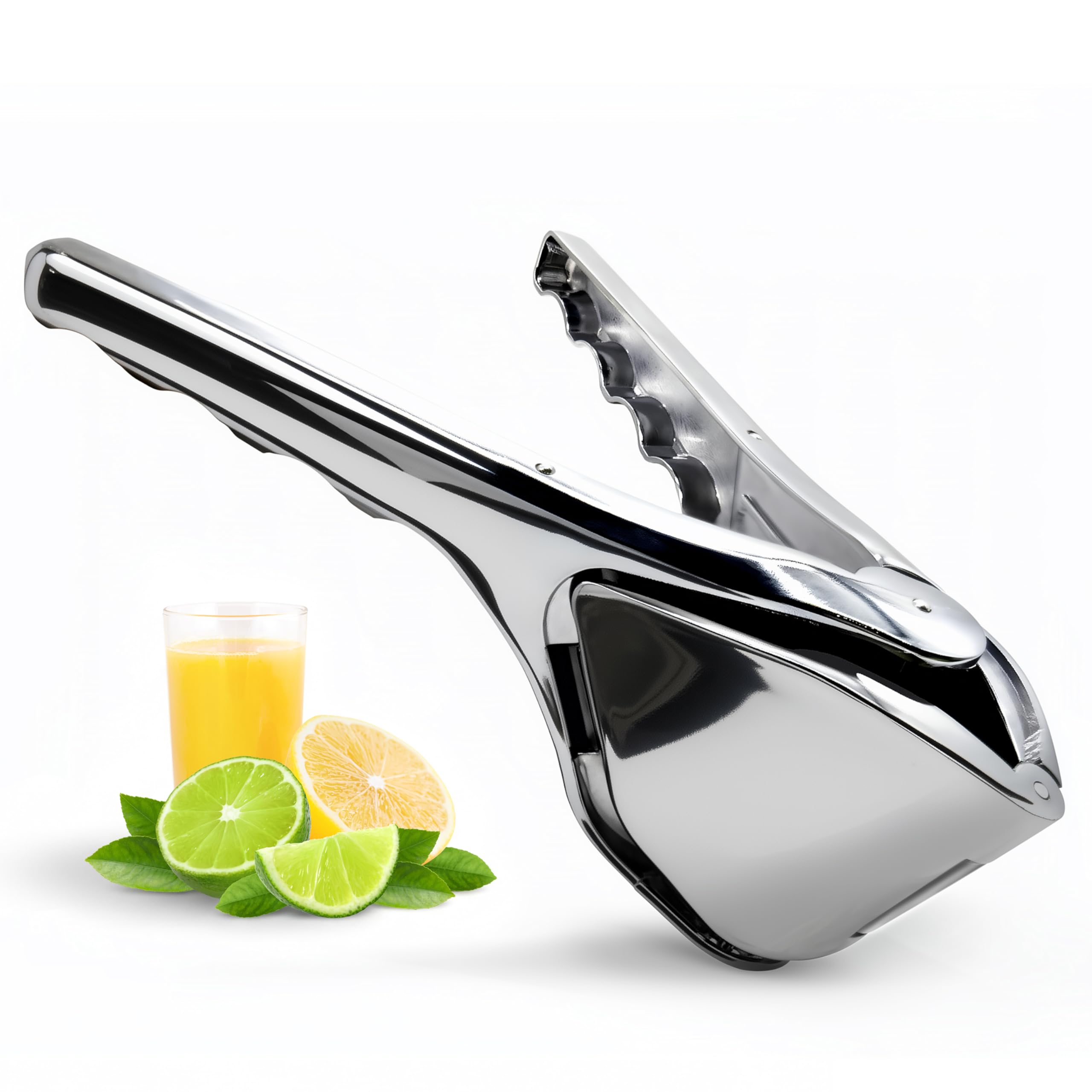
Printspree Heavy Duty Metal Squeezer
Key Features
- Construction Material: Enamel-coated Zinc
- Extraction Mechanism: Hand press
- Capacity: 0.5 Liters
- Cleaning & Care: Hand wash
- Durability: Coating may wear
- Price: $$
The Printspree squeezer delivers a heavy, solid feel during use and extracts juice efficiently from limes and small oranges. However, its enamel coating is vulnerable to damage from dishwasher heat, and the conflicting care instructions create confusion. For buyers who will commit to hand washing, this mid-range option offers a substantial build at a lower price than stainless steel models. Long-term material durability remains unverified compared to coatings that don’t wear.
Pros
- Heavy, solid construction gives confidence during pressing.
- Effective juice yield from limes and small oranges.
- Lower upfront cost than full stainless steel juicers.
Cons
- Inconsistent dishwasher safety claim: bullet points say safe, instructions say hand wash — risk of coating damage.
- Enamel coating may wear over time, unlike stainless steel alternatives.
Best for Space-Saving Storage
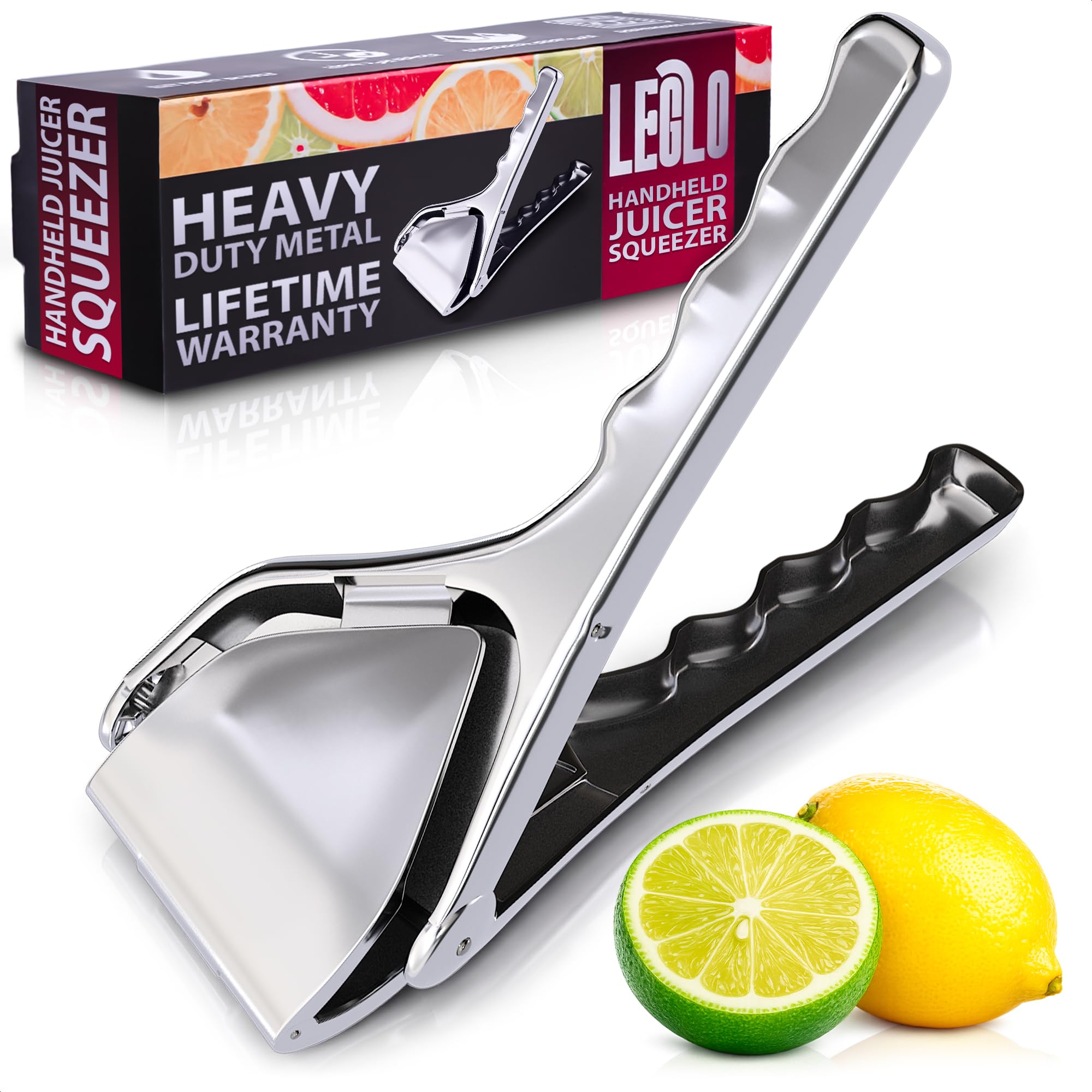
LEGLO Fold-Flat Lemon Squeezer
Key Features
- Construction Material: Stainless Steel
- Extraction Mechanism: Hand press
- Capacity: 0.5 Liters
- Cleaning & Care: Dishwasher safe
- Durability: Limited long-term data
- Price: $$
The LEGLO Fold-Flat Lemon Squeezer saves valuable counter space with its collapsible stainless steel design—a clear advantage for home bars or RVs where storage is tight. Because it’s a newer design, extended durability with frequent citrus juicing is still being assessed, and the weight distribution can feel unbalanced during one-handed pressing. For the occasional cocktail or lime squeeze, the fold-flat convenience outweighs these unknowns, but those who juice heavily may want a more established option.
Pros
- Folds flat for easy storage in small kitchens or bar carts
- Stainless steel body resists rust and holds up to citrus acids
Cons
- Weight balance may feel off during one-handed use, making extraction slightly awkward for some
How to Choose
Most budget manual juicers use coated aluminum that chips; true stainless steel models cost slightly more but last years longer.
Construction Material
The material determines how long the juicer will look and perform like new. Full stainless steel (18/8 or 304) resists rust, never chips, and can go in the dishwasher indefinitely. Coated aluminum or zinc alloy models look similar initially but the coating eventually flakes, exposing raw metal that can corrode and leave particles in your juice.
For frequent cocktail makers who juice several times a week, the upfront premium for stainless steel pays off within a year. If you only juice occasionally for a party, a coated model may last long enough to be a good value.
Extraction Mechanism
Lever-style presses (countertop or handheld with a hinge) generate more force than reamer-style juicers, extracting more juice with less hand strain. The trade-off is that lever presses often have plastic gears or hinges that can wear out, especially under daily use with hard fruit.
Reamer juicers (you press the fruit onto a spinning or stationary cone) are simpler and more durable but require more manual effort and produce slightly less yield. Choose a lever press if you have hand pain or prioritize maximum juice; choose a reamer if you want a no-fuss metal tool that will last decades.
Capacity
Capacity refers both to how large a fruit the juicer can accommodate and how much juice the bowl holds. A small bowl (under 8 oz) means emptying after every 2-3 lemons—fine for a single cocktail but tedious for batch margaritas. A larger bowl (24 oz or more) is better for volume but takes up more counter space.
Fruit size compatibility is more critical: many popular juicers can’t handle large oranges or grapefruit. If you primarily juice limes and lemons, a standard size works. If you regularly juice oranges, look for a model explicitly rated for them.
Cleaning & Care
Dishwasher-safe claims are common but not always reliable. Glass juicers can crack, coated aluminum can accelerate chipping, and some plastics warp. Hand washing with warm soapy water and a brush is safest for longevity, especially for models with crevices where pulp builds up.
Lever presses with removable parts are easiest to clean. Reamer-style juicers with a built-in strainer require rinsing the mesh quickly. If convenience is your priority, look for a model with smooth surfaces and no hidden pulp traps.
Durability
Durability in this category is almost entirely about avoiding plastic and coated metal failure points. The most common complaints after six months: handle coating splits, hinge pins fall out, and plastic gears strip. Stainless steel lever presses and all-metal reamers have no such failure modes.
For electric juicers, the motor and plastic housing are the weak links. Expect 1-2 years of moderate use from a budget electric model. If you want a single purchase that lasts a decade, stick with a well-built manual stainless steel option.
FAQ
Why does my citrus juicer handle break after a few months?
Most budget juicers use painted aluminum or plastic handles that fatigue under repetitive pressure. The coating splits or the metal fatigues at stress points. A full stainless steel or solid metal lever press avoids this failure because there’s no coating to chip and the metal is strong enough to handle daily use.
Is a stainless steel lemon squeezer better than a coated one for cocktails?
Yes, if you make cocktails regularly. Stainless steel won’t chip, rust, or leach any coating into your juice. Coated models are cheaper but the coating eventually flakes, and you don’t want metal particles in your drink. For occasional use, a coated squeezer is fine, but for weekly cocktail prep, stainless steel is worth the small premium.
Can I put my glass citrus juicer in the dishwasher?
Most glass juicers are labeled dishwasher-safe, but heat cycling often causes thermal shock cracks. Hand washing is the safer choice for glass. If you must use the dishwasher, place it on the top rack away from the heating element and let it cool completely before removing.
Which manual juicer gets the most juice out of limes and lemons?
Lever-style presses with a dual-gear mechanism, like the Chef’n FreshForce, extract up to 20% more juice than standard hand squeezers. The gears multiply your hand force and fully compress the fruit halves. Reamer-style juicers leave more juice in the rind because they don’t apply even pressure.