This post contains affiliate links. We may earn a small commission when you buy through our links — at no extra cost to you.
Suction cup glass washers seem simple — stick the base in the sink, scrub glasses, done. But a textured sink bottom or a narrow drain can turn that quick rinse into a constant wrestling match. For wine enthusiasts, the frustration compounds when delicate stems get bumped or the brush unscrews mid-scrub.
The real decision isn’t manual versus electric. It’s finding a washer that matches your sink surface and glass shape without wasting time or scratching stemware. Some models use larger suction cups, others rely on multiple smaller grips. Each approach has a clear limit.
The picks here prioritize stable attachment and thorough cleaning for wine glasses — because the last thing you want to worry about while polishing a Riedel is whether the brush will spin loose.
Top Picks
Best for Home Bars & Restaurants
New Star Triple Brush

Key Features
- Type: Manual
- # of Brushes: 3
- Suction Base: Suction cup
- Price: $
Thousands of home bar owners have made the New Star Triple Brush the top-selling manual glass washer in its category. Its three nylon brushes clean the interior, rim, and exterior of standard glasses in one motion, lifting lipstick marks, dried-on residue, and cloudy film with minimal effort. The suction base holds the unit upright in the sink while you pump the glass up and down, turning a tedious chore into a quick, consistent routine.
The washer’s performance depends almost entirely on your sink surface. On flat, non-textured bottoms the suction cup stays put for multiple uses, and the brushes maintain their stiffness through dozens of washes. In sinks with textured or ridged surfaces, the grip may weaken over time, and users occasionally need to hold the base by hand during cleaning — a minor adjustment that does not affect the cleaning quality itself.
This washer is purpose-built for home bar owners and small restaurants with standard flat-bottom sinks who want a simple, budget-friendly way to keep glassware clean. If your sink has a textured surface or if you wash dozens of glasses per hour in a commercial setting, an electric option or a different mounting method would serve better. For the majority of casual users, the tradeoff is marginal against the low price and effective cleaning.
Pros
- Cleans the inside, rim, and outside of glasses with three rotating brushes in one motion.
- Setup takes seconds — press the suction cup onto a clean, flat sink surface and start washing.
- Costs less than a single electric washer yet delivers consistent results on most glassware.
- Low maintenance: no batteries, cords, or electronics to worry about.
- Removes lipstick, dried-on residue, and cloudy film with minimal effort.
Cons
- On textured or ridged sink surfaces, the suction cup may gradually release during use, requiring you to hold the base.
- The nylon bristles are gentle on glass but may not scrub off baked-on residue from heavy beer mugs after repeated use.
Best for High-Volume Bars
Bar Maid Electric Washer

Key Features
- Type: Electric
- # of Brushes: 5
- Suction Base: Countertop
- Price: $$$
Five rotating brushes clean the inside and outside of glasses simultaneously, cutting wash time to seconds.
This washer targets high-volume commercial bars and restaurants where every second of staff time saved offsets the premium upfront cost. However, some units have experienced motor or electrical failure within days to months of purchase — a risk that operations with backup glassware can manage but may be unacceptable for lower-volume settings where downtime is more disruptive.
Despite its commercial power, the unit runs quietly enough for an open bar environment, drawing consistent praise for low noise compared to similar electric models.
Pros
- Five rotating brushes clean both sides of glasses in seconds, delivering consistent commercial-grade results.
- Quiet operation for a commercial glass washer — low enough for use in an open bar setting.
Cons
Best for Home Bars, Light Commercial
sprookber 3-Brush Washer
Key Features
- Type: Manual
- # of Brushes: 3
- Suction Base: Suction grip
- Price: $
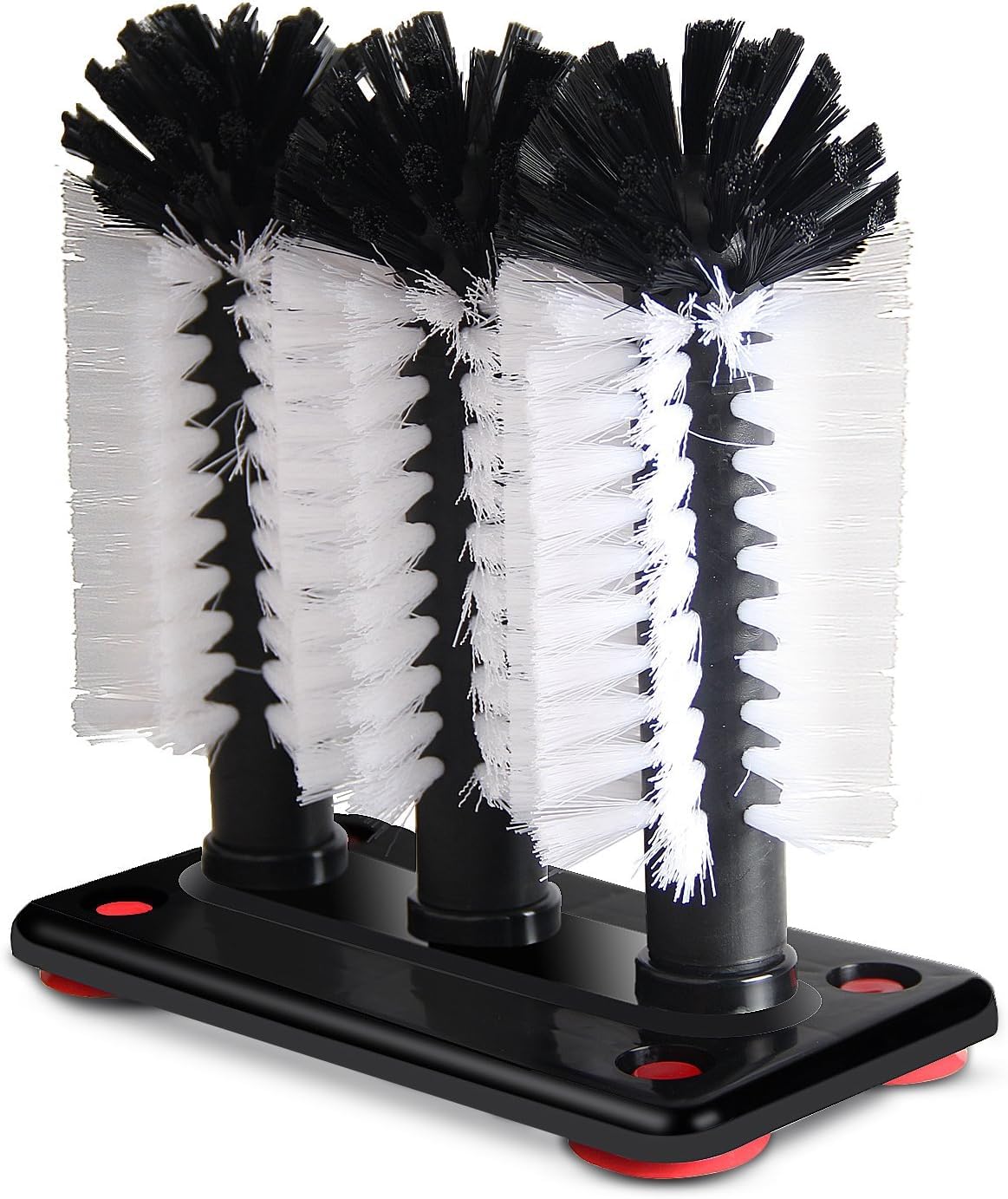
The sprookber 3-brush washer earns its reputation from bar environments where heavy beer mugs and pint glasses need quick cleaning. Designed to sit in a triple-sink setup, it scrubs the interior and rim effectively with three nylon brushes. Cleaning performance is on par with the top-selling manual washer, making it a solid option for home bars and moderate commercial use.
This model suits users with flat, smooth sink surfaces where suction cups can grip reliably. For those with textured sinks or high-volume bar needs where constant attachment matters, the suction may detach during use. Additionally, the brush arms can strip under frequent daily cleaning, so light-to-moderate loads are the intended use case.
Compared to the best-seller, the sprookber offers similar cleaning results with a slightly different base design. It is a capable alternative for buyers who prioritize thorough scrubbing for bar glassware and are willing to periodically check suction and brush condition.
Pros
- Cleans heavy beer mugs and glasses quickly, suitable for bar and restaurant use.
- Build quality feels more durable than budget alternatives.
- Base design works well in triple-sink bar setups.
Cons
- Suction cups may detach on sinks that are not perfectly flat or smooth.
- Brush arms can strip after several weeks of daily heavy use.
Best for Home Bars
G Francis Triple Scrubber

Key Features
- Type: Manual
- # of Brushes: 3
- Suction Base: Rubber suction cup
- Price: $
Cleaning effectiveness is where the G Francis triple scrubber stands out — every user who tested it reported spotless results from shot glasses to beer pints. The three brush setup reaches inside and outside simultaneously, cutting rinse time noticeably versus hand scrubbing. Build quality feels solid, with bristles that hold their shape through repeated use.
The main limitation lies in the suction cup base. On textured or uneven sink bottoms, the cup may lose grip during use, requiring you to hold the unit steady by hand. This is less of a problem on smooth, flat surfaces where a firm press secures it. Bristle wear on the nylon tips can accelerate under heavy daily use, though for home bar volumes it holds up fine.
This washer suits home bartenders who value thorough cleaning and don’t mind a hands-on approach to keep the base in place. If your sink surface is perfectly flat and you want set-and-forget stability, the top pick New Star offers higher overall confidence from a much larger user base. But for pure cleaning feedback on every glass, the G Francis delivers the most consistent results of any manual option here.
Pros
- Cleans shot glasses to beer pints without streaks or residue.
- Reduces washing time significantly compared to hand scrubbing.
- Sturdy build with bristles that resist bending during use.
Cons
- Suction cup may detach on textured or non-flat sink surfaces.
- Nylon bristle tips can show wear sooner under heavy daily use.
Best for Occasional Home Use
FEENM 3-Head Cup Washer

Key Features
- Type: Manual
- # of Brushes: 3
- Suction Base: 4 suction cups
- Price: $
Under $15, the FEENM 3-Head Cup Washer delivers effective cleaning on a range of glassware from beer mugs to wine glasses. While the top-pick New Star offers more consistent suction and durability, the FEENM provides a workable manual cleaning experience at a fraction of the cost. Its three brush heads handle various shapes, and the bristles are firm enough for light scrubbing. The 10-inch central brush reaches into tall stemware.
This washer suits home users who clean glassware occasionally and prefer not to spend more than ten dollars. The suction cups are small—in some cases they may detach from the sink or lose grip over time, and the brush arms can loosen during use. These limitations make it less suitable for daily commercial cleaning or for anyone needing a stable, hands-free operation. For the occasional party or weekend tidying, however, the FEENM gets the job done at a price that makes replacement easy if the suction or brush arms give out.
In short, the FEENM offers good cleaning performance for its cost, making it a practical option for light home use.
Pros
- Cleans a wide variety of glassware effectively, including beer mugs and wine glasses.
- Brush bristles hold up well for occasional home use.
- Very low price reduces the cost of entry for a manual washer.
Cons
- Brush arms may unscrew during use, requiring periodic tightening.
- Suction cups are small and may lose grip on textured or wet sink surfaces.
Best for Multi-Sink Setups
Havawish 2-Pack Washer

Key Features
- Type: Manual
- # of Brushes: 3
- Suction Base: 3 suction cups per base
- Price: $
This two-pack delivers a full set of three-brush washers for under $30, making it a practical option if you need spares for separate sinks or want a backup unit. The nylon/PP brushes feel sturdy out of the box and clean wine glasses and beer mugs reasonably well. However, with only a modest number of user experiences available and reports of bristles fraying or the suction base separating within a few months, this is better positioned as an occasional-use or secondary washer rather than a daily driver behind a busy bar.
Pros
- Two-pack offers a spare unit for multiple sinks or as a backup.
- Build feels solid for the entry-level price.
Cons
- Bristles may fray with regular use over a few months.
- Suction base can separate or lose grip during cleaning, requiring occasional repositioning.
Best for Light Home Use
Bonsicoky Bar Glass Washer

Key Features
- Type: Manual
- # of Brushes: 3
- Suction Base: 3 large suction cups
- Price: $
The Bonsicoky washer’s tall central brush is its standout feature, making short work of long-stem wine glasses and tall pint glasses that shorter brushes leave streaky. Setup is simple: press the suction base onto a clean, flat sink surface and you’re ready to clean. At a budget-friendly price, it delivers effective cleaning for glasses of various sizes.
The tradeoff comes in two areas. The suction cups are on the smaller side — on textured or slightly uneven sink surfaces, the base may lose grip and need repositioning. Some users have also noted that the middle brush can detach from its mounting after weeks of use. These limitations make this washer a better fit for occasional home cleaning than daily commercial use, especially if you have tall glassware and can keep an eye on the suction hold.
Pros
- Cleans tall glasses and bottles that shorter brushes miss
- Simple to set up and operate with no tools
Cons
- Suction cups may not hold securely on textured or uneven sink surfaces
- Center brush unit can detach from the base after repeated use
How to Choose
The most overlooked factor in buying a bar glass washer is your sink’s surface texture, which determines whether a suction base will actually stay put.
Manual vs Electric
Manual washers rely on you rotating the glass against stationary brushes. This gives you full control over pressure — important for delicate wine stems that could snap under an aggressive electric motor. Manual models also cost under $30, making them accessible.
Electric washers use a motor to spin brushes around the glass. They clean faster and require less effort, but they cost ten times more and introduce a failure point: the motor. For a high-volume wine bar washing hundreds of glasses daily, the speed justifies the premium. For a home bar, a manual washer is usually enough.
Number of Brushes
Most manual washers come with three brushes: two short side brushes and one taller center brush. That’s enough to clean the inside of a standard wine glass and the outside of a tumbler. A five-brush electric model covers inside and outside simultaneously, cutting wash time.
More brushes aren’t always better. On delicate glassware, additional bristles can create drag that makes it harder to control the glass. For a home bar that mostly washes stemware, three brushes provide a good balance between coverage and gentle handling.
Suction Base Quality
The suction base is the most common point of failure. It needs a perfectly flat, smooth, and clean sink surface to hold. Stainless steel and acrylic sinks work well; textured ceramic, ridged farmhouse sinks, or sinks with drain ridges often break the seal.
Some models use a single large suction cup, others use multiple smaller cups. Multiple cups can conform to slight unevenness, but each cup is a potential leak point. If your sink has any texture, consider a model with a clamp or simply hold the base while scrubbing.
FAQ
Will a bar glass washer scratch my wine glasses?
Soft nylon bristles generally won’t scratch glass, but some budget models use stiff bristles that can mar delicate stems. Look for washers with flexible nylon bristles and test on an old glass first. If you’re washing fine crystal, manual rotation with gentle pressure is safer than an electric motor.
Why does my glass washer brush keep coming unscrewed?
This happens when you rotate the glass counterclockwise — the friction unscrews the center brush. Always rotate glasses clockwise to tighten the brush against the base. If it still loosens, check that the brush is fully threaded and consider adding a drop of thread-locking adhesive.
Can I use a manual bar glass washer on a quartz sink?
Quartz sinks often have a subtle texture or grain that prevents suction cups from forming a tight seal. You may need to hold the base manually while scrubbing, or use double-sided mounting tape to secure it permanently. A flat stainless steel sink is much more reliable.
How do I fix a suction cup that won’t stick to the sink?
Clean both the sink and the suction cup with soap and water, then dry them completely. Apply a thin layer of water to the cup before pressing it down firmly. If that fails, the sink surface is likely too textured — consider a non-slip silicone mat under the base or switch to a clamp-style washer.